
Overstimulated or Anxious? A Therapist's Guide to Understanding Sensory Overload and Anxiety
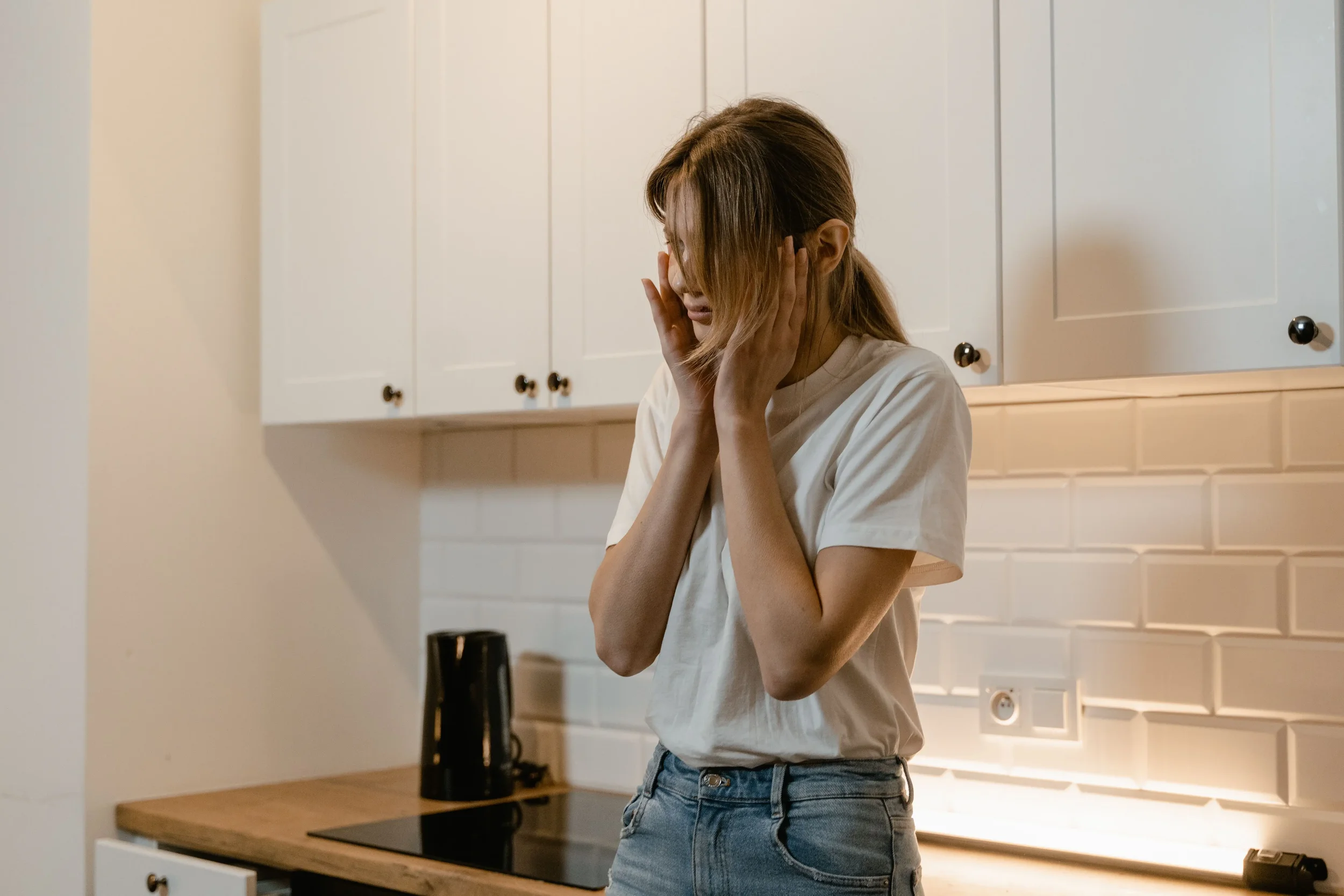
You're at a party, a grocery store, a busy open-plan office. The background noise builds. Conversations overlap. Bright lights reflect off every surface. Your heart rate climbs. You're flooded with feelings — irritability, overwhelm, a desperate need to leave. The feelings are real. It can be hard to focus on what's actually happening when you're in the middle of it. But what's driving them? Is that anxiety? Sensory overload? Or both?
The honest answer: it's often both — and distinguishing between them matters clinically. This guide explains what overstimulation and anxiety actually are, how they overlap, and what you can do about each. Understanding the difference helps you respond to your feelings more effectively, rather than treating every uncomfortable feeling the same way.
What Is Overstimulation?
Overstimulation — sometimes called sensory overload — is the experience of being overwhelmed by more sensory input than your brain can comfortably process. It's not a formal clinical diagnosis, but it's a well-documented experience tied to several measurable constructs in the research literature: sensory over-responsivity (SOR), sensory processing sensitivity (SPS), and hyperarousal.
Sensory processing sensitivity
Research with 139 adults found approximately 30% of the population scores high on sensory processing sensitivity — deeper processing of stimuli and heightened responsiveness to subtle cues. For people high in SPS, the same crowded restaurant or loud commute that others barely notice can trigger a significant stress response — leaving them with feelings of exhaustion, irritability, or shutdown that persist well after the stimulus is gone.
This trait is not a disorder. It's a trait — like introversion or a tendency toward perfectionism. The problems arise when sensory input consistently exceeds a person's processing capacity, or when that input pairs with fatigue, negative mood, or stressful circumstances. At that point, feelings of overwhelm can arrive quickly and intensely — and the feelings can feel indistinguishable from anxiety. That's when overstimulation becomes a daily life disruption.
Who experiences sensory overload?
Overstimulation affects people across many backgrounds and diagnoses:
Autistic people frequently experience sensory input more intensely, often finding everyday stimuli like background noise, bright lights, or certain textures overwhelming in ways that neurotypical people don't
People with ADHD — like autistic people — often have trouble filtering irrelevant information and sensory stimuli — background conversations, flickering lights, and competing sounds all compete for attention simultaneously
Highly sensitive people (those with elevated SPS) experience sensory processing differences that make them more reactive to subtle and overwhelming stimuli alike
People with anxiety disorders, PTSD, or insomnia also experience heightened sensory reactivity as part of a broader hyperarousal response
Common signs of overstimulation
When you feel overstimulated, your brain and body react in recognizable ways:
Irritability or emotional reactivity that feels disproportionate — a hallmark sign of feeling overstimulated
Difficulty concentrating or a foggy, scattered feeling (brain fog)
An urgent need to escape or reduce stimulation — a signal that you've become overstimulated and your nervous system needs a break
Physical sensations: headache, muscle tension, elevated heart rate, fatigue
Emotional shutdown or the sense of "hitting a wall"
Heightened sensitivity to auditory stimuli, visual stimuli, bright colors, or bright lights
Common triggers of overstimulation
Research confirms that overstimulation increases reliably in the afternoon and evening, in the presence of others, when unpleasant sensory or visual stimuli are present, and when a person is fatigued or in a negative mood. Common triggers include:
Loud noises, background noise, crowds
Bright lights, flickering screens, busy visual spaces
Multiple simultaneous sensory demands (a loud conversation while navigating traffic, for example)
Busy social settings that combine noise, movement, and interpersonal demands
Fatigue — which lowers the threshold for all sensory processing
What Is Anxiety?
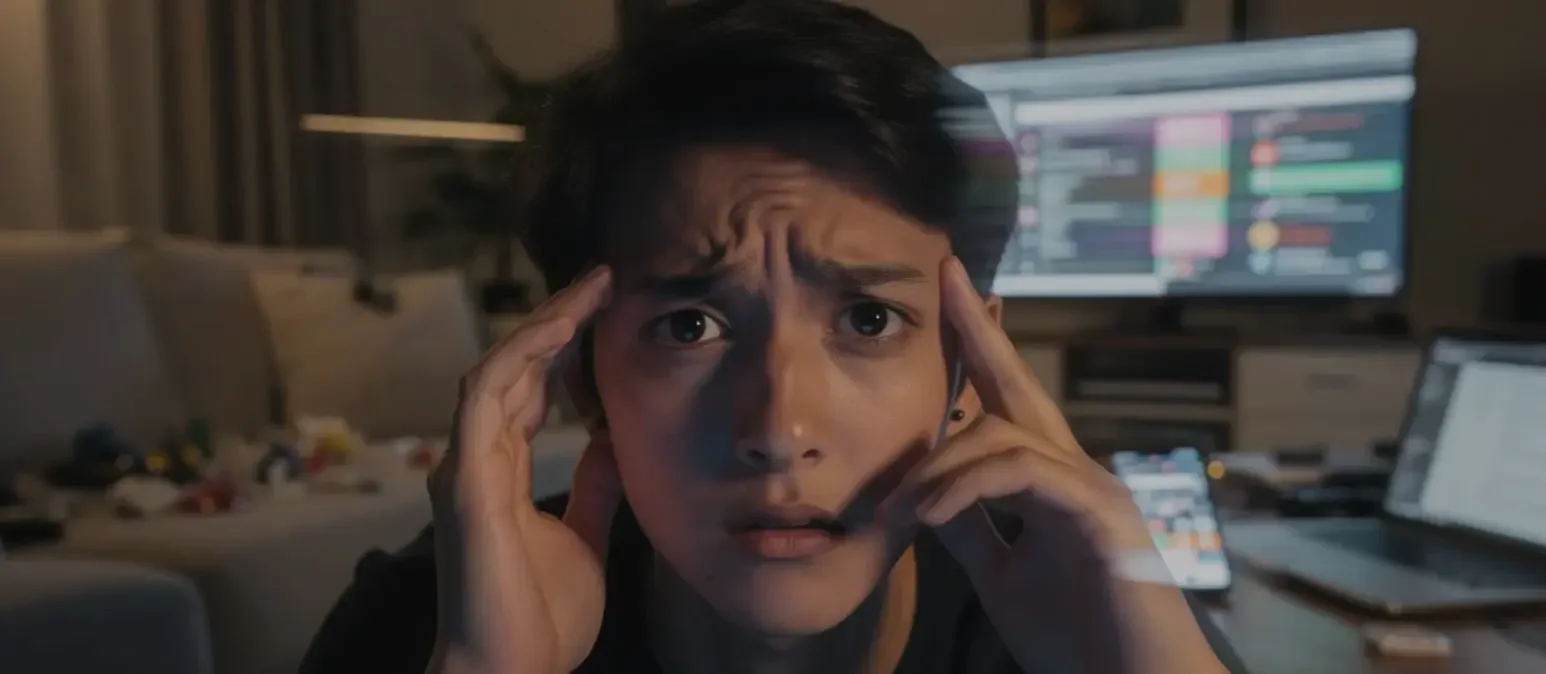
Anxiety is a normal human response to perceived threat — feelings of worry, unease, and tension that signal that something might go wrong. It becomes a clinical concern when it is excessive, persistent, difficult to control, and causes significant distress or impairment.
Core anxiety symptoms
A comprehensive JAMA review catalogs anxiety symptoms: persistent worry, palpitations, shortness of breath, dizziness, and muscle tension — with panic attacks representing peak autonomic activation. Generalized anxiety disorder specifically involves:
Excessive, hard-to-control worry about everyday concerns (work, relationships, finances, health)
Restlessness or feeling keyed up
Easy fatigue
Difficulty concentrating
Irritability
Muscle tension
Sleep disturbance
Anxiety's behavioral dimension
Anxiety manifests along three axes — cognitive (worry), behavioral (avoidance), and physiological (tension, trembling). The behavioral axis is particularly important: people with anxiety often avoid the spaces and situations that trigger their symptoms — which, in many cases, are exactly the same spaces that trigger overstimulation. Crowded places, loud events, busy social gatherings.
This behavioral overlap is one of the reasons overstimulation and anxiety can be difficult to distinguish. The avoidance looks the same from the outside; the internal experience is different.
The Overlap: Why Overstimulation and Anxiety So Often Co-Occur
Hyperarousal as the shared mechanism
A large transdiagnostic study established hyperarousal as the shared symptom linking anxiety, insomnia, PTSD, and ADHD. In anxiety, hyperarousal manifests as the subjective sense of being wound up, unable to settle, scanning for threat. In sensory overload, hyperarousal manifests as the body's inability to filter sensory information and process incoming sensory input without becoming overwhelmed. The emotions that follow — irritability, dread, the need to escape — can look identical from the outside.
Both anxiety and overstimulation involve an overactivated nervous system — one in which your brain and senses are on high alert, and your senses are interpreting input as potentially threatening even when it isn't. The trigger differs — anxiety is typically activated by perceived psychological threat; overstimulation by sensory input — but the downstream experience overlaps substantially: elevated heart rate, muscle tension, irritability, difficulty concentrating, urge to escape.
Three ways they're connected
Research identifies three models of how anxiety and sensory over-responsivity co-occur — each supported by evidence, and not mutually exclusive:
SOR as a product of anxiety — hypervigilance that accompanies anxiety sensitizes the nervous system to sensory stimuli, making overstimulation more likely
SOR as a driver of anxiety — chronic sensory overload produces hyperarousal and avoidance that, over time, develop into anxiety
Shared neurobiology — particularly atypical amygdala function, which processes both threat signals and sensory salience
These aren't mutually exclusive. Most people who experience both are living inside all three simultaneously.
The developmental pathway
A study of 231 adults found childhood sensory processing difficulties predicted adult anxiety disorders, with emotion dysregulation fully mediating the path. This matters clinically: for many adults who experience overstimulation alongside anxiety, the sensory sensitivity came first, and the chronic difficulty managing it contributed to the development of anxiety over time.
The cognitive link
A study of 313 students found intolerance of uncertainty partially mediates sensory sensitivity → anxiety, with the effect roughly twice as strong in females. This is a key insight: the anxiety that develops from overstimulation isn't just physiological. It also involves thought patterns — the anticipatory dread of being overwhelmed, the avoidance of uncertain spaces and situations, the hypervigilance about whether a situation will be "too much."
From the Therapist
"One of the most useful clinical distinctions we make with clients is between the experience of overstimulation and the anticipatory anxiety about overstimulation. Some people are perfectly regulated when they're calm and understimulated — but they carry constant anxiety about the possibility that they'll become overwhelmed. That anticipatory anxiety is often more disabling than the overstimulation itself. And it tends to respond well to the same thought-based approaches we use for anxiety more broadly."
How to Tell Them Apart
Neither overstimulation nor anxiety comes with a label. But there are useful clinical questions:
Does it have a sensory trigger?
Overstimulation is driven by actual sensory input: loud noises, bright lights, background conversations, crowded spaces. Anxiety can arise in quiet, calm settings in response to thoughts, memories, or perceived threats that aren't immediately present.
If you feel completely regulated in a quiet, low-stimulation environment but quickly feel overstimulated by sensory demands, sensory processing sensitivity is likely a significant factor. Sensory processing differences like these are common and don't indicate pathology.
Is worry the primary experience?
Anxiety is characterized by excessive worry — persistent, difficult-to-control concern about future negative situations. Overstimulation is characterized more by overload in the present moment: the brain and body's reaction to too much input right now.
If your most distressing experience is ongoing, free-floating worry that exists even in calm, quiet settings, anxiety is likely the primary driver.
Does it ease quickly when stimulation decreases?
Overstimulation typically resolves relatively quickly when sensory input is reduced — leaving a quiet room, using noise canceling headphones, lowering lights, taking a break from screens. People who cope effectively with sensory overload have usually identified these specific de-escalation tools. Anxiety often persists even after the triggering stimulus is removed, because the cognitive worry loop continues independent of the surroundings.
From the Therapist
"We often ask clients to track what helps. If reducing sensory input reliably gives them relief — noise canceling headphones, a dark room, time alone — that points toward sensory processing sensitivity as a primary factor. If they're still anxious in that quiet room, we're typically looking at anxiety that needs its own direct treatment. In practice, many clients need both: environment modifications to reduce overstimulation and therapeutic work to address the anxiety that has built up around it."
Coping Strategies
Before diving into specific strategies: coping with overstimulation and coping with anxiety require overlapping but distinct approaches. A key first step is to focus on identifying which experience you're having. Knowing which you're experiencing helps you cope more effectively. The strategies below are organized by what they target — but most people benefit from drawing on both sets.
For overstimulation
Identify and track your triggers
Identify your specific triggers — track which sensory stimuli, times of day, and environments reliably lead to overload
Build in sensory breaks
Build in sensory breaks — brief periods away from high-stimulation environments, especially in the afternoon when SPS tends to peak
Modify your environment
Modify your environment — noise canceling headphones for commutes, dimmer lighting in your workspace, reduction of background noise in your home
Reduce stimulation before bed — when you feel overstimulated in the evening, it disrupts sleep, which then increases sensitivity the following day
Use positive sensory stimuli — pleasant scents, comfortable textures, gentle music — to help calm your nervous system when you start to feel overstimulated
For anxiety
Name and examine the worry
Name the worry — externalizing the anxious thought gives you something concrete to examine rather than an amorphous feeling to avoid
Practice present-moment grounding
Practice present-moment grounding — when anxiety is pulling you into future catastrophe, sensory grounding (noticing what you can see, hear, and feel right now) anchors you in the current moment
Challenge avoidance patterns
Challenge avoidance patterns — gradual, supported exposure to avoided situations is the most effective behavioral intervention for anxiety
Seek professional support — cognitive behavioral therapy has the strongest evidence base for anxiety disorders and can be adapted for clients with sensory processing differences; therapy gives you structured tools to cope with the feelings that anxiety produces
When both are present
Most people who experience overstimulation also experience some degree of anxiety — and the two require somewhat different approaches. Environment modifications help with overstimulation; thought-based and behavioral strategies address anxiety. Therapy that understands both is most effective.
From the Therapist
"What we try to communicate to clients who experience both: these aren't competing problems, they're related ones. Addressing the sensory sensitivity doesn't require the anxiety to go away first. And the anxiety work doesn't require exposing yourself to environments that exceed your processing capacity. The goal is understanding your sensory system well enough to manage your environment — and having addressed the anxiety that built up around the times that wasn't possible."

When to Seek Professional Support
Learning to cope with overstimulation and anxiety is possible — and knowing when to seek professional support is part of that process.
Whether what you're experiencing is overstimulation, anxiety, or some combination, professional support is worth seeking when signs include:
Your symptoms are significantly affecting your daily life — your work, relationships, or ability to leave the house
You're increasingly avoiding environments and activities because you're afraid of being overwhelmed
Your anxiety about overstimulation is present even in calm settings
You've tried self-help strategies and haven't found lasting relief
You're wondering whether ADHD or autism spectrum disorder might be part of the picture
Sensory processing differences, anxiety, ADHD, and autism spectrum disorder are all well-understood clinically — and the signs of each can overlap in ways that make self-diagnosis difficult. Tracking your specific signs and triggers is often the most useful first step. Effective support exists for each. A thorough assessment is the starting point.
The therapists at the Providence Therapy Group work with adults in Providence, Cranston, Cumberland, and Edgewood who are dealing with sensory overload, anxiety, and the overlap between them. Schedule an appointment to start understanding your experience more clearly.
Not sure where to start?
Talk to a Providence therapist who can work with you.
Disclaimer: This article is for educational purposes only and is not a substitute for professional medical advice, diagnosis, or treatment. Always seek the advice of your physician or qualified mental health provider with any questions you may have regarding a mental health condition. If you are in crisis or experiencing thoughts of self-harm, please call 988 (Suicide and Crisis Lifeline) or go to your nearest emergency room.