
Sandwich Generation Burnout: How to Protect Your Mental Health While Caring for Two Generations

If you’re caring for your aging parents while also raising your own children, you’re part of what researchers call the “sandwich generation” — and you’re likely exhausted. Demographic shifts, such as increased longevity and changing family structures, have contributed to the rise of the sandwich generation. You’re managing doctor’s appointments for your mom, homework help for your kids, and somehow trying to keep up at work. You feel constantly pulled in three directions, with your own needs always last on the list.
This isn’t just stress — it may be caregiver burnout. The typical age group most affected by sandwich generation responsibilities is adults ages 40-59, who often find themselves supporting both children and aging parents. The baby boomer generation has historically played a significant role in the sandwich generation, but as more baby boomers age out of caregiving, demographic shifts are changing who takes on these responsibilities.
The challenges faced by those balancing care for both children and aging parents can lead to significant physical, emotional, and financial burdens. Approximately 2.5 million Americans are simultaneously caring for both aging parents and children, and studies show sandwich generation caregivers experience significantly higher levels of burnoutthan those caring for only one generation (Owsiany et al., 2023).
The good news: understanding what drives sandwich generation burnout — including the unique challenges faced by this age group — and knowing which strategies actually work can help you protect your mental health while continuing to care for the people you love.
What Is the Sandwich Generation and Caring for Aging Parents?
The sandwich generation refers to adults ages 40 to 59—most commonly middle-aged adults—who are simultaneously caring for aging parents while also raising their own children. Research estimates that about 1 in 4 adults who care for children are also providing unpaid care for an aging parent or other older adult, representing approximately 2.5 million people in the United States (Lei et al., 2023). According to Pew Research Center, nearly one in four U.S. adults are part of the sandwich generation, providing care for both an aging parent and a child.
Middle-aged adults are the primary demographic impacted by these dual caregiving responsibilities. These individuals often manage three generations within one household, requiring coordination and communication among family members. As highlighted by Pew Research, the number of sandwich generation adults continues to grow as the aging population increases and many adults delay childbearing. Advances in healthcare have led to increased life expectancy, requiring extended support for older adults, while economic factors like high living costs and student debt cause adult children to remain financially dependent on their parents.
Why Is Sandwich Generation Stress Different?
All caregivers experience stress, but sandwich generation caregivers face a unique combination of pressures:
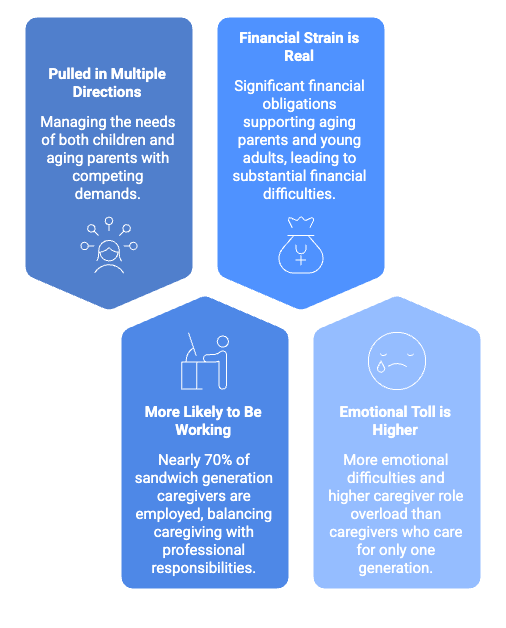
You’re pulled in multiple directions. You’re managing the needs of both children—raising children or supporting younger family members—and aging parents, often with competing demands on the same day. This dual caregiving role means providing emotional, physical, and sometimes financial support to multiple family members, including other family members.
You’re more likely to be working. Nearly 70% of sandwich generation caregivers are employed, compared to about 54% of caregivers who only care for an older adult (Lei et al., 2023). 31% of sandwich generation caregivers feel constantly pressed for time, balancing caregiving with professional responsibilities and the needs of other adults.
The financial strain is real. Sandwich generation caregivers face significant financial obligations as they support aging parents and young adults who may still be struggling to achieve financial independence. They are nearly twice as likely to report substantial financial difficulties as other caregivers — 24% versus 12% (Lei et al., 2023). Many spend about $10,000 per year on caregiving expenses, which can reduce household income. More than half of middle-aged adults provide financial support to their grown children, highlighting widespread financial pressures. Approximately 30% have supported a grown child financially in the past year, while 32% have given financial assistance to an aging parent. Among those supporting both, only 28% report living comfortably, while 11% struggle to meet basic expenses.
The emotional toll is higher. Sandwich generation caregivers report more emotional difficulties (44% versus 32%) and higher caregiver role overload than caregivers who care for only one generation (Lei et al., 2023). Caring for multiple family members can strain relationships and contribute to significant stress, with 77% reporting emotional stress and 43% experiencing sleep problems.
Understanding Caregiver Burnout
Caregiver burnout is more than just feeling tired. It’s a state of physical, mental, and emotional exhaustion that affects every area of your life. Those in the sandwich generation often juggle multiple caregiving roles, supporting children and aging parents or other older adults. This dual responsibility can lead to burnout, impacting mental and physical health and overall well-being. Many experience emotional exhaustion, detachment, and self-doubt.
Sandwich generation caregivers report significantly higher burnout levels than those caring only for children (Owsiany et al., 2023). The added burden of caring for an aging parent on top of parenting creates greater burnout risk.
At the Providence Therapy Group, we see how invisible this burden can feel. People say “I should handle this” or “Others have it worse.” But caring for two generations while working is genuinely difficult. Exhaustion, guilt, and feeling like you’re failing everyone aren’t personal weaknesses—they’re normal responses to an overwhelming situation. The constant demands leave little personal time, making self-care harder.
What Makes Sandwich Generation Burnout Worse?
Recent research identifies factors driving burnout in sandwich generation caregivers. Beyond sheer responsibilities, complex family dynamics—shifting roles, emotional strain, and changing relationships—exacerbate burnout risk.
The Quality of Your Caregiving Relationships Matters Most
For sandwich generation caregivers, relationship quality is the strongest predictor of burnout — more than hours spent caregiving (Fenstermacher et al., 2026). Conflict with a parent, tension with siblings, or marital strain can increase burnout risk. Positive relationships can buffer stress even when caregiving demands are high.
The Health Impact Is Real
Becoming a sandwich caregiver associates with mental and physical health decline, especially when providing over 20 hours of care weekly (Xue et al., 2025). Sustained caregiving nearly triples the risk of depressive symptoms (Haley et al., 2020). Biological effects include immune dysregulation and accelerated aging (Christian et al., 2023).
Gender and Structural Inequities Play a Role
Women experience increased depressive symptoms and decreased wellbeing transitioning into sandwich caregiving, an effect less consistent in men (Albertini et al., 2024). Protective effects of paid work vary by race, benefiting White caregivers but not Black caregivers (Brady et al., 2024).
Warning Signs You're Experiencing Burnout
Recognizing the early signs of burnout is crucial for sandwich generation members to take timely action and protect their own well being. Burnout can manifest in emotional, physical, relationship, and behavioral symptoms that impact daily functioning and overall health.

Emotional: Overwhelm, sadness, irritability, numbness, guilt, loss of interest. For some caregivers, these symptoms may also include intense anxiety or panic attacks with sudden surges of fear.
Physical: Chronic fatigue, headaches, appetite changes, insomnia, frequent illness.
Relationship: Conflict, isolation, difficulty connecting emotionally.
Behavioral: Social withdrawal, coping with substances or food, irritability, concentration issues. Past traumatic experiences can also shape these patterns, and trauma-focused therapy may be helpful if caregiving is triggering older wounds.
Providence-Specific Challenges
Providence’s car culture complicates logistics—driving parents to appointments, picking up kids, commuting. Suburban isolation limits support networks, making it harder to find nearby help or community resources. Many employers lack flexible schedules or remote work options, forcing caregivers to make difficult choices between job responsibilities and caregiving duties. For some, accessing flexible teletherapy options can help offset these barriers by making mental health care more convenient. This combination of factors increases stress and reduces time for self-care, intensifying the risk of burnout among sandwich generation caregivers in the area.
Evidence-Based Strategies to Protect Your Mental Health
1. Practice Self-Compassion
Self-compassion is essential for reducing caregiver stress and depressive symptoms. When you notice self-critical thoughts, try to replace them with kindness and understanding toward yourself. Recognize that caregiving is challenging and that it’s okay to have limits and imperfections. Practicing self-compassion helps you maintain emotional resilience and sustain your caregiving role without burning out.
2. Address Relationship Quality Directly
Open and honest communication with your parents, siblings, partners, and children is crucial for easing stress, and some couples find that premarital or couples counseling helps them strengthen communication before and during intense caregiving seasons. Discuss care needs, financial responsibilities, and expectations clearly to avoid misunderstandings. Setting healthy boundaries can prevent resentment and reduce emotional strain. Regular check-ins about caregiving roles help maintain strong relationships and foster cooperation among family members.
3. Try Mindfulness-Based Approaches
Mindfulness practices, such as Mindfulness-Based Compassionate Living, can significantly reduce emotional exhaustion and increase self-compassion. Even short daily sessions of meditation or deep breathing help you stay grounded amid caregiving demands. Web-based compassion programs offer accessible ways to learn these techniques from home. Incorporating mindfulness into your routine promotes better emotional regulation and stress management.
4. Seek Professional Support
Professional counseling, including Cognitive Behavioral Therapy (CBT) and mindfulness-based interventions, effectively reduces caregiver burden and symptoms of depression. A therapist can help you develop coping skills tailored to your unique challenges, and working with an individual therapist in Providence can provide support that fits your specific situation. Therapy also provides a safe space to express difficult emotions and receive guidance on managing family dynamics, and group therapy in Providence can offer additional support from others facing similar caregiving stresses. Don’t hesitate to reach out for support when feelings become overwhelming.
5. Prioritize Your Own Health
Maintaining your physical health is vital to sustaining caregiving responsibilities. Keep regular medical appointments, prioritize quality sleep, and engage in regular physical activity. If you’re also pregnant or parenting a baby or toddler while caring for aging parents, perinatal mental health support in Providence can be an important part of protecting your own well-being. Eating nutritious meals and limiting alcohol intake support overall well-being. Establishing personal boundaries around caregiving hours ensures you have time to recharge and prevents exhaustion.
6. Set Boundaries
Learn to say no to non-urgent requests that add unnecessary stress. Limit caregiving hours to prevent burnout and protect your personal time. Establish visiting schedules that balance your family’s needs without overwhelming you. Clear boundaries help manage expectations and create space for self-care and other important relationships.
7. Use Available Resources
Take advantage of respite care services, meal delivery programs, and transportation assistance to lighten your caregiving load. Joining support groups—either in person or online—connects you with others who understand your challenges and can offer emotional support. Employee Assistance Programs (EAPs) can provide counseling and resources tailored for caregivers. For those in the “club sandwich” generation caring for grandchildren as well, these resources can be especially valuable.
8. Manage Work-Caregiving Conflict
Communicate openly with your employer about your caregiving responsibilities and explore flexible work arrangements like telecommuting or adjusted hours. If you’re a student caregiver, college-focused mental health support in Providence can also help you navigate school, work, and family demands. Know your rights under the Family and Medical Leave Act (FMLA) to take protected leave if needed. Planning ahead and setting realistic work goals can help balance professional and caregiving demands. Utilizing workplace flexibility reduces stress and helps maintain job performance.
9. Ask for Help and Delegate
Don’t hesitate to reach out to family members, friends, or professional caregivers for assistance. Delegate specific tasks such as grocery shopping, transportation, or appointment scheduling to share the workload. Using shared family calendars and routines can organize caregiving responsibilities and reduce chaos. Asking for help not only eases your burden but also encourages family involvement and support.
When to Seek Professional Help
Seek mental health support if experiencing persistent depression, anxiety, emotional exhaustion, relationship or work difficulties, substance use, or feelings of hopelessness. The Providence Therapy Group offers support for many of these concerns through individual and couples counseling.
Finding Support in Providence
The Providence Therapy Group offers relationship-based therapy for caregivers, helping with emotions, coping, relationships, boundaries, and self-care. Serving Providence and nearby areas.
Taking care of yourself isn’t selfish — it’s essential. Schedule an appointment today or explore online and in-person therapy options in Providence.
Disclaimer: This article is educational and not a substitute for professional medical advice. Always consult your healthcare provider with any questions or emergencies. If you're in crisis: Call 988 (Suicide and Crisis Lifeline) for free, confidential support 24/7.