
Is It Social Anxiety or Shyness? When to Seek Help | Providence Therapy
Is It Social Anxiety or Shyness? When to Seek Help
Do you feel nervous before giving a presentation or meeting new people? Does your heart race when you walk into a crowded room? If so, you're experiencing something completely normal—most people feel some level of social discomfort in certain situations.

But what if these feelings are more than occasional nerves? What if the fear of social situations has started affecting your job, your relationships, or your ability to do everyday things like eating in public or making phone calls? How do you know if what you're experiencing is just shyness or something that needs professional attention?
The line between normal shyness and social anxiety disorder can feel unclear, especially when you've always been "the quiet one" or "the shy person" in your family. Many people with social anxiety disorder don't seek help because they think social anxiety is just part of their personality—something they have to live with rather than something that can be treated. Social anxiety disorder is often underdiagnosed and undertreated due to individuals not seeking help for their symptoms.
This guide explains the key differences between shyness and social anxiety disorder, when social discomfort crosses into a diagnosable condition, and how to know if it's time to seek professional help.
What's the Difference Between Shyness and Social Anxiety Disorder?
Shyness and social anxiety disorder exist on a spectrum, but they're not the same thing.
Normal Shyness
Shyness is a personality trait that many people experience. Being shy from time to time doesn't affect education, career, and personal relationships in significant ways. When you're shy:
You might feel nervous in new social situations but warm up over time
The discomfort is temporary and fades as you become more comfortable
You can still function in social situations, even if they're not your favorite
You don't avoid important activities because of social fears
The nervousness doesn't significantly interfere with your daily life
Shyness might mean you prefer small gatherings to large parties, or you need time to feel comfortable with new people. This is a normal variation in personality—not just shyness that requires treatment.
Social Anxiety Disorder (Social Phobia)
Social anxiety disorder, also called social phobia, goes beyond normal shyness. Social anxiety disorder is a common mental health condition and a chronic mental health condition that affects how you function in everyday life. Social anxiety disorder is characterized by ongoing feelings of intense fear of being judged, rejected, or humiliated in social situations. This intense fear is persistent, overwhelming, and significantly interferes with daily functioning.
A person with social anxiety disorder feels symptoms of anxiety or fear in situations where they may be scrutinized, evaluated, or judged by others. The fear is so strong that it can cause you to avoid social situations entirely, even when you know the avoidance is limiting your life.
Social anxiety disorder can cause significant distress and interfere with daily activities, unlike occasional shyness. Approximately 5% to 10% of people across the world have social anxiety disorder, making it a common type of anxiety disorder among anxiety disorders.
Key Differences
The main distinctions between shyness and social anxiety disorder include:
Intensity: Social anxiety disorder involves intense fear or intense anxiety that feels overwhelming and out of proportion to the actual situation. People with social anxiety may experience intense fear in social situations that others find routine.
Duration: The diagnosis of social anxiety disorder requires that symptoms persist for at least six months. Shyness may come and go or improve with familiarity, but social anxiety disorder is persistent. Symptoms of social anxiety may fluctuate over time and are often worse during times of significant stress or change.
Impact on functioning: Social anxiety disorder can negatively affect education, career, and personal relationshipsin significant ways. You might turn down job opportunities, avoid dating, or skip important events because of your fear.
Physical symptoms: While shy people might feel butterflies, people with social anxiety experience physical symptomsthat can be severe—racing heart, sweating, trembling, nausea, difficulty breathing, and even panic attacks. These anxiety symptoms can be debilitating.
Avoidance: Social anxiety disorder leads to persistent avoidance of social situations or enduring them with extreme distress. Routine activities, such as eating in public or making phone calls, can feel overwhelming for individuals with social anxiety disorder.
In our work with clients at the Providence Therapy Group, we've found that many people struggle with this question—"Is it just me, or is this a real problem?" One of the most validating moments in therapy is when clients realize their experiences have a name and that effective treatment exists. The distinction isn't about labeling yourself but about understanding whether your social fears are limiting your life in ways that matter to you. If you're asking the question, it's worth exploring with a professional.
What Does Social Anxiety Disorder Feel Like?
Many people start exploring whether they might have social anxiety when they first consider seeing an individual therapist in Providence to talk about how social situations are affecting their life.
Understanding what social anxiety disorder actually feels like can help you recognize if you're experiencing it. Social anxiety disorder symptoms include both emotional symptoms and physical manifestations.
Emotional and Psychological Symptoms
People with social anxiety disorder may experience:
Intense fear of certain social situations, especially those that are unfamiliar or where you feel watched or evaluated by others
Anticipatory anxiety—people with social anxiety disorder may worry about engaging in social situations for weeks before they happen
Fear of being judged negatively, embarrassed, or humiliated
Extreme self-consciousness in everyday social situations
Fear that others will notice your anxiety symptoms
Negative thoughts that spiral: "Everyone thinks I'm stupid," "I'm going to embarrass myself," "They can tell I'm anxious"
These psychological symptoms can be as distressing as the physical ones, creating a constant sense of dread about social interactions.
Physical Symptoms
Physical symptoms of social anxiety and physiological symptoms can be severe and distressing:
Rapid or pounding heartbeat (sometimes feeling like chest pain)
Sweating or hot flashes
Trembling or shaking
Nausea or upset stomach
Difficulty breathing or feeling like you can't catch your breath (feeling anxious physically)
Dizziness or lightheadedness
Muscle tension
Blushing or feeling your face get hot
Panic attacks in severe cases
These physiological symptoms can create a vicious cycle: you fear that others will notice your physical anxiety, which makes you more anxious, which intensifies the physical symptoms.
Behavioral Patterns
People with social anxiety often develop behavioral patterns to cope:
Avoiding social events, parties, or gatherings
Declining opportunities (job interviews, presentations, social invitations)
Safety behaviours—things you do to feel safer but that actually maintain the anxiety (avoiding eye contact, planning exactly what you'll say, staying on the edge of social situations)
Difficulty making friends and maintaining friendships out of fear of being embarrassed, humiliated, or rejected
Using alcohol or substances before social situations to reduce anxiety (which can increase the risk of substance abuse)
Avoiding social situations can feel helpful in the short term, but the anxiety is likely to remain without treatment.These patterns provide temporary relief but reinforce the fear long-term.
When Does Social Anxiety Become a Disorder?
Social anxiety disorder usually starts during childhood or adolescence and may resemble extreme shyness in young people. Many people have had these fears for as long as they can remember.
Diagnostic Criteria
Mental health professionals use specific criteria to diagnose social anxiety disorder. According to the Diagnostic and Statistical Manual of Mental Disorders (the statistical manual published by the American Psychiatric Association), social anxiety disorder is diagnosed when:

You experience marked fear or anxiety about social situations where you might be scrutinized
You fear acting in a way that will be negatively evaluated (rejected, embarrassed, humiliated)
The social situations almost always provoke fear or anxiety
You avoid the social situations or endure them with intense distress
The fear or anxiety is out of proportion to the actual threat
The symptoms persist for six months or more
The fear, anxiety, or avoidance causes significant distress or impairment in social, occupational, or other important areas of functioning
The symptoms are not better explained by another mental disorder, mental illness, or medical condition
A mental health professional or mental health specialist will conduct a thorough assessment, which may include a physical exam to rule out medical conditions that could cause similar symptoms (like thyroid problems). You might also be referred to your primary care provider or healthcare professionals for a complete evaluation.
When to Seek Treatment
You should consider seeking professional help if:
Your anxiety is interfering with daily life: If social fears prevent you from going to work, attending school, maintaining relationships, or doing necessary activities in your daily life, it's time to seek treatment.
You're avoiding important opportunities: Turning down job promotions, avoiding dating, or missing important life events because of social anxiety means it's significantly impacting your life.
You're experiencing significant distress: Even if you're functioning, if the anxiety is causing you considerable emotional pain or affecting your mental health, treatment can help.
You're using alcohol or drugs to cope: Using substances to manage social anxiety can lead to substance abuse problems and is a sign you need professional support.
Physical symptoms are severe: If you're experiencing panic attacks, intense physical symptoms, or health concerns related to anxiety, professional help is important.
It's affecting your relationships: If social anxiety is straining your personal relationships or making it difficult to connect with others, therapy can help.
You've been struggling for six months or longer: Social anxiety disorder diagnosed requires persistent symptoms, but you don't need to wait six months to seek help if you're struggling.
We often tell clients that you don't need to meet every diagnostic criterion to benefit from treatment. Many people wait years thinking "it's not bad enough yet" or "other people have it worse." But if social anxiety is affecting your quality of life—causing you distress, limiting opportunities, or straining relationships—that's enough reason to seek help. Early intervention often means shorter treatment and better outcomes. You don't have to reach a crisis point before getting support.
What Are the Risk Factors for Developing Social Anxiety Disorder?
Understanding risk factors for developing social anxiety disorder can help explain why some people develop this condition:
Genetics: Social anxiety disorder may run in families, suggesting a genetic component. Having a family member with social anxiety or other anxiety disorders increases your increased risk.
Environmental factors: Childhood experiences play a role. Environmental factors, such as childhood trauma or harsh discipline, may influence the development of social anxiety disorder. Bullying, family conflict, or social rejection can contribute.
Temperament: Children who are behaviorally inhibited, shy, or withdrawn when facing new people or situations may be at higher increased risk.
Life experiences: Negative social experiences—being teased, bullied, rejected, or humiliated—can trigger social anxiety disorder in some people.
Brain chemistry: Imbalances in neurotransmitters like serotonin may play a role in anxiety disorders.
Social anxiety disorder occurs more frequently in women than in men, though the reasons for this aren't fully understood.
What Other Conditions Often Occur with Social Anxiety Disorder?
Social anxiety disorder commonly co-occurs with depression and other anxiety disorders. Understanding these connections is important for comprehensive treatment.
Common Co-Occurring Conditions
Depression: People with social anxiety disorder may experience loneliness, depression, or suicidal thoughts due to the isolation caused by the condition. The chronic stress of social anxiety can contribute to depressive symptoms.
Other anxiety disorders: Social anxiety often occurs alongside generalized anxiety disorder, panic disorder, or specific phobias among anxiety disorders.
Substance use: People with social anxiety disorder are at a higher risk of developing substance misuse issues, often starting as self-medication for anxiety symptoms.
Attention-Deficit/Hyperactivity Disorder (ADHD): Individuals with social anxiety disorder may also experience obsessive-compulsive disorder and attention-deficit/hyperactivity disorder (ADHD).
Body dysmorphic disorder: Some people with social anxiety also struggle with body dysmorphic disorder, intense concerns about perceived physical flaws.
Co-occurring conditions can complicate the treatment of social anxiety disorder, which is why comprehensive assessment and treatment planning are essential. The presence of multiple disorders can make treatment more complex, but effective help is available.
What Are the Most Effective Treatments for Social Anxiety Disorder?
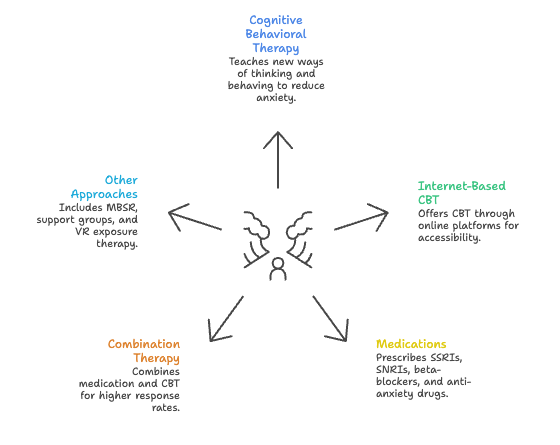
The good news is that social anxiety disorder treated effectively can lead to significant improvement. Treatment for social anxiety disorder typically involves psychotherapy, medication, or both. Treating social anxiety disordersuccessfully often requires finding the best treatment that works for you, which may take trial and error.
Cognitive Behavioral Therapy (CBT)
Cognitive behavioral therapy is established as first-line psychotherapy for social anxiety disorder, with response rates ranging from 50% to 65% in high-quality studies, superior to placebo (32%) and waitlist controls (7-15%).
Cognitive behavioral therapy (CBT) or cognitive behavioural therapy is a form of talk therapy and psychological therapy that teaches different ways of thinking, behaving, and reacting to social situations to help you feel less anxious and fearful. Cognitive behavioral therapy CBT teaches a person different ways of thinking, behaving, and reacting to situations to help them feel less anxious and fearful.
Key components include:
Psychoeducation about social anxiety disorder
Cognitive restructuring—learning to challenge negative thoughts and identify thinking patterns that fuel anxiety
Exposure therapy—a CBT method that focuses on progressively confronting the fears underlying an anxiety disorder
Developing coping skills and relaxation techniques, including social skills training
Acceptance and commitment therapy (ACT) is another form of psychological therapy that encourages nonjudgmental acceptance of thoughts and behaviors and promotes engagement in meaningful activities.
Internet-Based CBT
For those who cannot access traditional face-to-face therapy, internet-based cognitive behavioral therapy (iCBT) offers an effective alternative. Meta-analyses show that internet-delivered CBT and app-delivered CBT produce large effect sizes for social anxiety disorder, and internet-based CBT was as effective, or slightly more effective, than face-to-face CBT.
One study found that internet cognitive therapy required only 6.45 hours of therapist time compared with 15.8 hours for face-to-face therapy to achieve the same symptom reduction—more than doubling the clinical benefit per therapist hour.
Medications
Selective serotonin reuptake inhibitors (SSRIs) and serotonin-norepinephrine reuptake inhibitors (SNRIs) are commonly prescribed medications for social anxiety disorder. SSRIs and SNRIs are commonly used medications for treating social anxiety disorder.
SSRIs show a mean short-term response rate of 55% versus 32% for placebo. SNRIs like venlafaxine have shown similar response rates to selective serotonin reuptake inhibitors.
Beta-blockers can help control physical symptoms like rapid heart rate and sweating, particularly for performance anxiety (like public speaking). However, beta blockers don't address the underlying anxiety.
Anti-anxiety medications like benzodiazepines are fast-acting anti anxiety medications that can reduce anxious feelings quickly but may lead to tolerance and dependence, so they're typically used only short-term or for specific situations.
Combination Therapy
Research shows that combining medication and CBT produces the highest response rates. In one study, combined treatment showed a 71.9% response rate compared with medication alone (54.3%), CBT alone (47.1%), and placebo (33.3%).
Another study found that escitalopram plus internet-based CBT resulted in significantly more clinical responders than placebo plus CBT, with benefits maintained at 15-month follow-up.
Other Evidence-Based Approaches
Mindfulness-Based Stress Reduction (MBSR): Research demonstrates that MBSR was noninferior to escitalopram for treating anxiety disorders, making it "a well-tolerated treatment option with comparable effectiveness to a first-line medication." Mindfulness and relaxation techniques such as deep breathing and progressive muscle relaxation help manage physical symptoms of anxiety, and some clients also benefit from Dialectical Behavior Therapy (DBT) for emotion regulation and validation.
Support groups can provide helpful feedback and allow you to learn from others with social anxiety disorder who understand what you're experiencing. Support groups allow individuals to learn from others' experiences, and group therapy at Providence Therapy Group is designed to mirror real-life interactions in a supportive setting.
Virtual Reality Exposure Therapy: For some individuals, virtual reality can provide a controlled environment for exposure therapy and has shown effectiveness comparable to traditional exposure.
Clinical trials may also be available through the National Institute of Mental Health and other research institutions for those interested in participating in research on new treatments.
From a clinical perspective, we see remarkable transformations when clients engage in CBT for social anxiety. The combination of learning to challenge anxious thoughts and gradually facing feared situations creates lasting change—not just symptom reduction but genuine confidence building. Many clients tell us they wished they'd sought treatment sooner. With response rates of 50-65% and benefits that persist long-term, CBT offers hope for people who've struggled with social anxiety for years, even decades.
What Can You Do While Waiting for Treatment?
If you're planning to seek treatment but haven't started yet, or you're supplementing professional treatment for managing social anxiety disorder, these strategies can help you overcome social anxiety:
Challenge your negative thoughts: Notice when you're predicting the worst or assuming others are judging you. Ask yourself: "What's the evidence for this thought? What would I tell a friend who thought this?"
Practice gradual exposure: Instead of avoiding all social situations, start small. Gradually facing feared social situations, rather than avoiding them, can help overcome social anxiety.
Focus on others: Focusing on others rather than yourself in social situations can help reduce anxiety. When you're engaged in genuinely listening to someone else, you're less focused on your own anxiety.
Reduce safety behaviors: Safety behaviours—like avoiding eye contact, rehearsing what to say, or standing in corners—provide temporary relief but maintain anxiety long-term.
Engage in social skills training: Engaging in social skills training or assertiveness training can help improve interactions with others and build confidence, especially when working with a Providence-based therapist specializing in anxiety and relationships.
Practice self-compassion: Practicing compassion towards yourself and acknowledging progress can aid in managing social anxiety disorder. Recovery takes time, and many people find that working with an insight-oriented individual therapist helps them understand and shift long-standing self-critical patterns.
Maintain a healthy lifestyle: Practicing a healthy lifestyle can help combat anxiety, including getting enough sleep and exercise, eating a healthy diet, and seeking support from trusted family and friends. Community resources for managing SAD include local support networks, specialized supports like perinatal mental health care in Providence, and daily habits like regular exercise and reduced caffeine intake.
Join support groups: Support groups can provide helpful feedback and allow you to learn from others with similar experiences.
Practice mindfulness: Mindfulness practices can help develop awareness of thoughts and reduce anxiety.
Getting Help at the Providence Therapy Group
If you've been wondering whether your social fears are "just shyness" or something more, or if you recognize the signs and symptoms of social anxiety disorder in yourself, professional support can make a significant difference.
Without treatment, social anxiety disorder can limit career and educational growth, strain personal relationships, and increase the risk of depression or substance misuse. But with the right treatment, most people with social anxiety disorder experience significant improvement and can engage more fully in life.
At the Providence Therapy Group, our therapists specialize in treating social anxiety disorder using evidence-based approaches including cognitive behavioral therapy, exposure therapy, and relationship-based therapy focused on trust and insight, and skills training. We understand that seeking therapy itself can feel anxiety-provoking when you have social anxiety, and we work to make the process as comfortable as possible.
Located in Providence, Rhode Island and Cumberland, Rhode Island, we serve clients throughout Providence, Cranston, Edgewood, and the surrounding areas, with an easy way to schedule in-person or online sessions with our therapists. We offer both in-person sessions and online teletherapy for Rhode Island residents, giving you flexibility in how you access mental health care.
You don't have to continue living with intense social fear. Social anxiety disorder is one of the most treatable mental health conditions, and successful treatment can help you build confidence, reduce anxiety, and participate more fully in work, relationships, and activities you've been avoiding.
If you're ready to explore whether what you're experiencing is social anxiety disorder and learn about treatment options, schedule an appointment to speak with one of our experienced therapists.
Disclaimer: This article is for educational purposes only and is not a substitute for professional medical advice, diagnosis, or treatment. Always seek the advice of your physician or qualified mental health provider with any questions you may have regarding a mental health condition. If you are in crisis or experiencing thoughts of self-harm, please call 988 (Suicide and Crisis Lifeline) or go to your nearest emergency room.