
What Causes Sexual Anxiety in Men? (And How to Overcome It)
Sexual performance anxiety affects more men than you might expect. Studies show that sexual performance anxiety affects up to 25% of men and 16% of women, characterized by fear, worry, or nervousness related to sexual activity. This anxiety creates a frustrating pattern: worry about performance leads to difficulties with erection or premature ejaculation, which increases anxiety about future encounters. The pressure to perform sexually can create a vicious cycle of anxiety and dissatisfaction.
The good news? Sexual performance anxiety is highly treatable. Understanding what causes it and knowing your treatment options can help you break free from the pattern and enjoy a satisfying sex life again.
What Is Sexual Performance Anxiety?
Sexual performance anxiety occurs when feelings of anxiety affect your sexual interest, performance, or pleasure. It’s a type of performance anxiety specific to sexual situations, affecting men of all ages and backgrounds.
Research shows that anxiety in sexual situations leads you to focus on performance rather than erotic cues, which compromises sexual arousal. Instead of being present with pleasurable sensations, you’re mentally evaluating how well you’re performing—worrying about maintaining an erection, ejaculating too quickly, or whether your partner is satisfied.
This self-evaluation creates a vicious cycle. The more you worry, the more likely you are to experience difficulties, which reinforces anxiety for next time.
In our work with men experiencing sexual performance anxiety, we’ve noticed that many are surprised to learn how common this issue is. They often feel isolated and ashamed, assuming they’re the only ones struggling. When we share that research shows up to a quarter of men experience this, there’s visible relief. Just knowing you’re not alone can begin to reduce the shame that often intensifies the problem.
What Causes Sexual Performance Anxiety?
Sexual performance anxiety doesn’t have a single cause. Multiple factors contribute to psychogenic sexual difficulties, including predisposing factors (traumatic past experiences, strict upbringing, inadequate sex education), precipitating factors (relationship problems, major life events), and maintaining factors (ongoing relationship issues, mental health problems).
Psychological Causes
Fear of failure is often the core driver behind sexual performance anxiety. Psychological symptoms can manifest as negative self-talk, fear of failure, and intrusive thoughts during sexual encounters. You might worry about:
Not being able to achieve or maintain an erection
Ejaculating too quickly (premature ejaculation)
Not satisfying your partner
Your body not performing the way you expect
Anxiety about sexual performance or relationship issues is the critical element in sexual avoidance patterns. In some men, this anxiety can reach panic proportions, creating physical symptoms like increased heart rate, sweating, and muscle tension during sexual situations.
Other psychological factors include body image concerns, past negative sexual experiences or sexual abuse, stress from work or finances, and depression or generalized anxiety disorder.
Relationship Issues
Relationship problems significantly contribute to sexual performance anxiety. Communication difficulties, unresolved conflicts, or emotional disconnection from your sexual partner can all manifest as sexual anxiety. Involving your sexual partner in open conversations and mutual understanding is crucial, and many couples benefit from personalized, relationship-based therapy to address these patterns.
Partners may misinterpret avoidance of intimacy as lack of love or attraction, leading to resentment and decreased relationship satisfaction. This creates additional pressure when sexual situations do arise.
Medical Problems and Anxiety
Medical conditions can play a significant role in the development and persistence of sexual performance anxiety. Chronic health issues such as diabetes, high blood pressure, and heart disease can directly impact sexual function—often leading to challenges like premature ejaculation or erectile dysfunction. These physical changes can trigger or intensify anxiety about sexual performance, creating additional stress during intimate moments (and sometimes setting up a cycle where anxiety itself worsens the physical symptoms).
Certain medications, including selective serotonin reuptake inhibitors (SSRIs) commonly prescribed for depression and anxiety, may also cause sexual dysfunction as a side effect. This can include difficulties with ejaculation, reduced sexual desire, or problems maintaining an erection—all of which can contribute to performance anxiety. (SSRIs work by increasing serotonin levels in the brain, but this same mechanism can interfere with the neurochemical pathways involved in sexual arousal and response.)
If you're experiencing sexual performance anxiety and have a medical condition or are taking medication, it's important to discuss these factors with your healthcare provider. Addressing the underlying medical issues, adjusting medications when appropriate, and incorporating behavioral therapy or counseling can help restore sexual function and reduce anxiety. By taking a holistic approach that considers both physical and psychological factors—rather than treating them as separate problems—you can improve your sexual performance and overall well-being.
Ejaculation Problems and Performance Anxiety
Ejaculation problems—think premature ejaculation, delayed ejaculation, and retrograde ejaculation—get tangled up with sexual performance anxiety in ways that can really mess with your head. Picture this: you're already worried about how things might go in the bedroom, and that fear becomes a self-fulfilling prophecy. The anxiety cranks up the likelihood of ejaculation issues, which then feeds right back into more anxiety for next time—creating what feels like an endless loop that's tough to break free from.
Premature ejaculation often gets triggered by performance anxiety—all that pressure to perform can actually cause you to climax earlier than you'd want (talk about counterproductive). On the flip side, delayed ejaculation might show up when anxiety makes you hyper-focused on your performance, turning what should feel natural into an uphill battle to reach orgasm. Retrograde ejaculation, while less common, can spark its own set of worries about fertility and sexual function—fueling that performance anxiety fire even more.
Getting a handle on ejaculation problems means digging into both the physical and psychological pieces of the puzzle. Whether the root cause traces back to anxiety, medical conditions, or some combination of factors, reaching out for support can help you break free from that cycle. Picture yourself with effective treatment that restores confidence, improves sexual function, and dials down the anxiety that so often tags along with ejaculation problems—that's what's possible when you take the step to get help.
Connection to Anxiety Disorders
If you have a diagnosed anxiety disorder, you're at higher risk for sexual difficulties. Men with anxiety disorders have a median erectile dysfunction prevalence of 20%, and ED may be more severe in this population, which is one reason many people with anxiety seek individual therapy for anxiety and related concerns.
Research on young men found that within 12 months before ED diagnosis, 17.1% had depression or anxiety compared to 12.9% of controls. The anxiety often predates the sexual dysfunction, suggesting it may be a contributing factor rather than just a response to sexual difficulties.
How Does Sexual Performance Anxiety Affect Your Sex Life?
Sexual performance anxiety takes a toll on your interest in sex, sexual pleasure, and relationships. The effects extend beyond the bedroom.
Physical symptoms may include:
Erectile dysfunction
Premature ejaculation (the main symptom and most common sexual problem to affect males)
Delayed ejaculation or difficulty reaching orgasm
Decreased sexual desire
Emotional and behavioral effects include:
Avoiding intimate situations altogether
Loss of interest in sex due to emotional toll
Increased relationship tension
Decreased self-esteem and confidence
Studies show that higher sexual performance anxiety links to higher sexual distress and lower sexual and relationship satisfaction in both you and your partner—this isn’t just an individual problem, it affects the couple.
We often tell men in our practice that sexual performance anxiety creates what we call a “spectatoring” problem. Instead of being an active participant in a pleasurable experience, you become an observer of your own performance, constantly monitoring and judging. This mental distance from the experience is precisely what undermines natural sexual response. Learning to shift attention back to pleasurable sensations rather than self-evaluation is often a key part of treatment.
Shifting your focus from performance to pleasurable sensations can help you enjoy sex more fully, even if performance issues persist.
What Treatment Options Are Available?
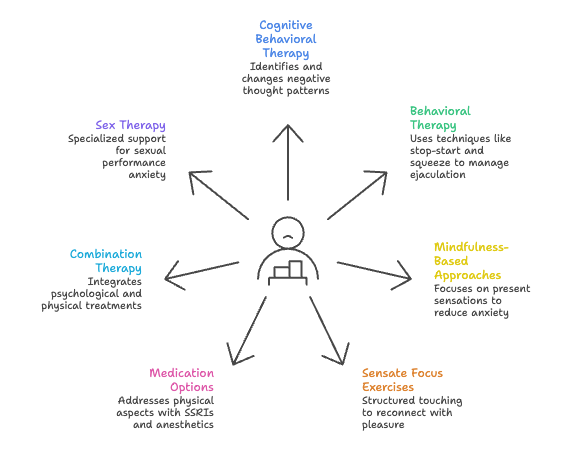
Most people find relief from sexual performance anxiety using one or more treatment options. Most people also find relief from premature ejaculation using one or more treatment options. A comprehensive treatment approach is important, as it addresses both psychological and physical aspects, often with support from a licensed mental health practice like the Providence Therapy Group.
Cognitive Behavioral Therapy (CBT)
CBT is highly effective for sexual performance anxiety, helping you identify and change negative thought patterns that fuel the anxiety-performance pattern, and many clients now access CBT conveniently through online teletherapy with licensed providers.
Research on CBT for erectile dysfunction found that online CBT significantly improved erectile functioning, intercourse satisfaction, orgasmic functioning, sexual desire, and overall satisfaction. What's particularly encouraging is that CBT benefits extend long after treatment ends—men who received CBT continued improving 15-18 months later, while those on medication alone showed no further improvement.
CBT for sexual anxiety typically involves:
Identifying anxious thoughts during sexual situations
Challenging unrealistic beliefs about performance
Developing coping strategies for managing anxiety
Gradually confronting feared situations
Behavioral Therapy for Premature Ejaculation
Men who experience premature ejaculation may benefit from behavioral therapy, which is often the first-line treatment for this condition. Premature ejaculation is typically diagnosed based on a detailed sexual history and discussion of symptoms, rather than a single definitive test. During diagnosis, your therapist may ask about your sexual history, including details about your sexual experiences and any patterns you have noticed.
The stop-start technique and the squeeze technique are behavioral methods used to help manage premature ejaculation and regain control, and some men find that structured group therapy for sexual and relationship concerns provides additional support while they practice these skills. Premature ejaculation is often treated with a combination of behavioral therapy, counseling, and sometimes medication, depending on the underlying cause.
The stop-start technique involves:
Stimulating the penis until just before ejaculation
Stopping all stimulation until the urge passes
Resuming stimulation and repeating the process
The squeeze technique works similarly, but when you feel close to ejaculation, you or your partner gently squeezes the head of the penis until the urge subsides.
Kegel exercises can also help improve control over ejaculation by strengthening pelvic floor muscles. These involve repeatedly contracting and relaxing the muscles you use to stop urination.
Mindfulness-Based Approaches
Mindfulness techniques help you focus on pleasurable sensations rather than evaluative thoughts about performance.
Studies on mindfulness for men with erectile dysfunction showed promising effects on erectile functioning, overall sexual satisfaction, and non-judgmental observation at 6-month follow-up. Research indicates that mindfulness works by reducing sexual avoidance, distraction, and negative schemas—all factors that maintain sexual performance anxiety.
Sensate Focus Exercises
Sensate focus involves structured touching exercises that help you reconnect with physical pleasure without performance pressure. These exercises typically start with non-genital massage and gradually progress, allowing you to focus on sensations rather than outcomes.
Recent research found that online sensate focus exercises improved erectile function among men with lower baseline function, suggesting this approach can serve as part of stepped care or be integrated with other treatments.
Medication Options
For some men, medication can help address the physical aspects of sexual performance anxiety:
Selective serotonin reuptake inhibitors (SSRIs) are commonly prescribed to help delay ejaculation. Dapoxetine (Priligy) is an SSRI specifically designed to treat premature ejaculation. Other SSRIs like paroxetine and sertraline are sometimes used off-label for this purpose. In some cases, other medicines such as the tricyclic antidepressant clomipramine may also be prescribed off-label to help delay ejaculation.
Topical anesthetics can help delay ejaculation by reducing sensitivity when applied to the penis 10-30 minutes before sex.
PDE5 inhibitors (like sildenafil/Viagra) are used to treat erectile dysfunction and can help with erectile dysfunction when combined with therapy.
These treatments aim to restore healthy sexual function and support a return to normal ejaculation patterns.
Combination Therapy: The Most Effective Approach
For many men, combining psychological therapy with medication produces better results than either alone.
A meta-analysis found that combined treatment (psychological intervention plus PDE5 inhibitors like sildenafil) was more effective for ED symptoms and sexual satisfaction than either treatment alone. Another study showed that 48% of men receiving integrated treatment met success criteria for erectile function versus only 29% on medication alone.
This makes sense—medication addresses the physical aspect while therapy addresses the psychological patterns maintaining the anxiety.
Sex Therapy and Couples Counseling
Working with a qualified sex therapist provides specialized support for sexual performance anxiety. Guidelines recommend that performance anxiety specifically related to fear of sexual failure is best evaluated and treated by a qualified sex therapist, and both partners should participate and cooperate with therapy.
If relationship issues are contributing to the anxiety, couples therapy can help improve communication, rebuild trust, and reduce pressure in sexual situations, and some partners choose premarital or structured couples counseling to strengthen their foundation proactively.
How Can You Overcome Sexual Performance Anxiety?
Beyond professional treatment, several strategies can help reduce sexual performance anxiety.
Communicate with Your Partner
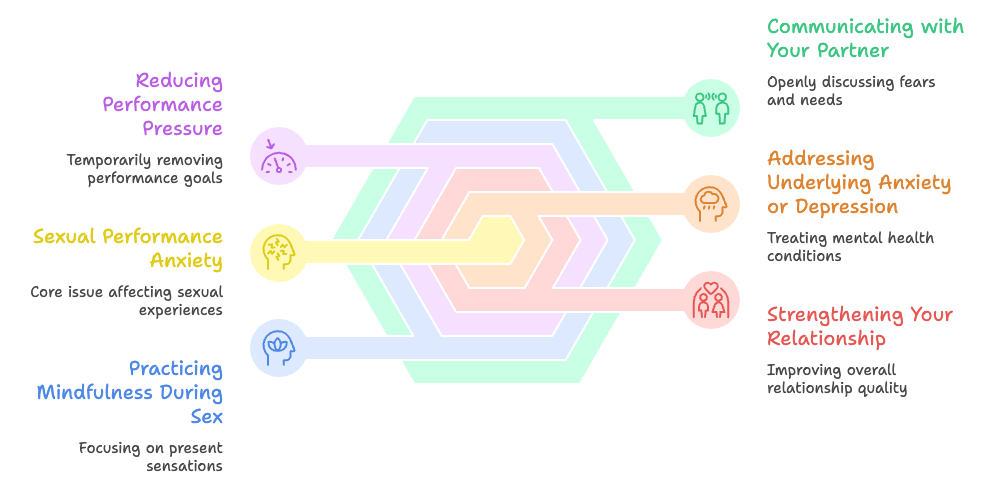
Open communication about your fears and worries reduces pressure and builds trust. Understanding both your own and your partner's sexual needs can reduce anxiety and enhance experiences.
Talk openly about what you're experiencing and how it makes you feel, pressure you're feeling to perform, ways to make intimacy less anxiety-provoking, and taking the focus off penetration and orgasm.
Practice Mindfulness During Sex
Focus on pleasurable sensations in the moment rather than evaluating your performance. Notice what feels good physically without judgment. When you catch yourself worrying about performance, gently redirect attention to physical sensations and connection with your partner.
Reduce Performance Pressure
Agree with your partner to take penetrative sex or orgasm off the table temporarily. Explore other forms of intimacy without the goal of erection or ejaculation. This can reduce anxiety and help you rediscover what feels good without pressure.
Address Underlying Anxiety or Depression
If you have generalized anxiety, social anxiety, or depression, treating these conditions may significantly improve sexual function. Talk with a mental health provider about treatment options, such as individual and couples therapy with an experienced psychologist.
Strengthen Your Relationship
Work on the overall quality of your relationship. Address conflicts, improve communication, and prioritize emotional intimacy. A stronger relationship foundation often translates to less sexual anxiety, which is especially important during vulnerable times such as pregnancy and the postpartum period.
From our experience, one of the most powerful shifts happens when couples reframe sex from a performance to an experience of connection and pleasure. When the goal becomes shared enjoyment rather than "successful" intercourse, the pressure that maintains performance anxiety often dissolves. We encourage couples to explore what feels good without any agenda for erections or orgasms, which paradoxically often improves sexual function naturally.
Preventing Premature Ejaculation
Managing premature ejaculation often involves a thoughtful blend of lifestyle adjustments, self-help strategies, and—when the situation calls for it—medical intervention. Practicing relaxation techniques like deep breathing or progressive muscle relaxation can help you navigate the anxiety and stress that may be hijacking your sexual performance. Regular physical activity, including those targeted Kegel exercises, strengthens your pelvic floor muscles and gives you the tools to delay orgasm during intimate moments—think of it as building your sexual stamina foundation.
During sex, taking strategic breaks or slowing down when you sense you're approaching the point of no return can help you regain control and extend the experience. Using condoms or applying a topical anesthetic to the penis decreases sensation—essentially turning down the volume on overwhelming stimulation and making it easier to prevent premature ejaculation. It's also helpful to avoid excessive sexual stimulation and to communicate openly with your partner about pacing and preferences—after all, this journey works best as a team effort.
If premature ejaculation is linked to an underlying medical condition or medication side effects, working closely with your healthcare provider to address the root cause or adjust your treatment can make a significant difference. Picture this: with the right combination of evidence-based techniques and professional support, you can take charge of premature ejaculation and enjoy a more satisfying sex life—no matter where you're starting from.
Self-Help Resources
If you're navigating premature ejaculation or sexual performance anxiety, a variety of evidence-based self-help resourcesare available to support your journey toward meaningful improvement. Books like "Coping with Premature Ejaculation"by Michael Metz, PhD, and Barry McCarthy, PhD, offer practical, research-backed strategies for managing sexual dysfunction and performance anxiety—think of them as your roadmap through unfamiliar territory. Online forums and support groups provide a safe, judgment-free space to share experiences, ask questions, and connect with others facing similar challenges (because you're definitely not alone in this).
Cognitive-behavioral therapy (CBT) practices—such as mindful focus exercises and cognitive restructuring—can help you address the negative thought patterns and beliefs that fuel anxiety and sexual performance issues. Picture this: your mind as a garden where anxious thoughts have taken root, and these techniques as tools to clear the weeds and plant healthier thinking. Many mobile apps and online courses now offer discreet, accessible ways to learn about sexual health, behavioral therapy techniques, and evidence-based methods to improve sexual function—putting the power to change directly in your hands.
For personalized, expert guidance, consider consulting with a healthcare provider or certified sex therapist (the gold standard for addressing these concerns). They can help you identify the most effective self-help resources and treatment approaches for your unique situation—no two people's experiences are identical—empowering you to take control of sexual performance anxiety and steer toward a more fulfilling, confident sex life. It's okay—wise, even—to ask for professional support when you're ready to make lasting changes.
When Should You Seek Professional Help?
Consider reaching out to a therapist or healthcare provider if:
Sexual performance anxiety is causing significant distress
You're avoiding intimate situations with your partner
The problem is affecting your relationship or self-esteem
You've tried self-help strategies without improvement
You have symptoms of anxiety or depression beyond sexual situations, including stressors specific to life stages such as college-related mental health challenges
Many men feel embarrassed to discuss sexual problems, but these issues are common and highly treatable. Seeking professional support is a sign of taking your health and relationship seriously, not weakness, and reaching out to schedule an in-person or online therapy appointment can be an important first step.
If you're looking for support with sexual performance anxiety, the therapists at the Providence Therapy Group understand the psychological factors that contribute to sexual difficulties and can help you develop strategies to overcome them. Schedule an appointment to get started.