
Inside a Relationship Therapy Session: What to Expect & How It Works
Inside a Relationship Therapy Session: How Therapists Help Couples Reconnect
If you're considering couples therapy, you might be wondering: What actually happens in a relationship therapy session? How does a therapist help two people with different perspectives work through their problems? What will we be asked to do, and will it feel awkward or uncomfortable?

These are common questions for couples thinking about starting therapy. Understanding what happens behind closed doors in a couples therapy session can help ease anxiety and set realistic expectations. While every therapist has their own style and every couple's situation is unique, there are common elements that most relationship therapy sessions share.
This guide takes you inside a typical couples therapy session to show you how therapists create a safe space, what techniques they use to help partners reconnect, and what makes the therapeutic process effective.
What Is the Goal of a Relationship Therapy Session?
Before diving into what happens during sessions, it's important to understand what couples therapy is designed to accomplish. Couples therapy is a type of psychotherapy designed to help couples improve their relationship satisfaction, resolve conflicts, and enhance communication.
The primary goals of relationship therapy sessions include:
Improving communication: Learning to express needs clearly, listen actively, and understand your partner's perspective without defensiveness. This includes developing communication skills and effective communication techniques.
Breaking unhelpful patterns: Identifying negative cycles of interaction (like pursue-withdraw or blame-defend) and learning healthier ways to relate. Breaking unhelpful patterns is essential for long-term relationship health.
Building emotional connection: Creating or restoring emotional intimacy and helping partners feel safe being vulnerable with each other to build a deeper connection.
Resolving relationship problems: Addressing specific relationship issues like trust, intimacy concerns, parenting disagreements, or managing life transitions.
Strengthening relationship skills: Developing practical tools for conflict resolution, problem-solving skills, and maintaining connection during difficult times.
Research shows that couples therapy is highly effective, with 60% to 80% of distressed couples benefiting from treatment. Couples therapy produces significant improvements in relationship satisfaction, communication skills, emotional intimacy, and individual psychological well-being.
The Therapist's Role: Neutral Guide, Not Judge
One of the most important things to understand about couples therapy sessions is the therapist's role. A good couples therapist is trained to remain neutral and focused on supporting both partners equally.
What this means in practice:
The therapist doesn't take sides: Even if one partner seems "more at fault" for a particular issue, a skilled marriage and family therapist views relationship problems as patterns that both you contribute to and can work together to change.
Both partners should feel heard: The therapist actively manages the therapy session to ensure both voices are included, especially if one partner tends to dominate conversations or the other tends to withdraw.
The therapist acts as a guide, not a judge: Rather than telling you what to do or declaring who's right or wrong, the couples therapist helps you understand your patterns, express your needs, and discover solutions that work for your unique romantic relationship.
Creating emotional safety is paramount: The therapist structures conversations to prevent the therapy session from becoming a continuation of harmful arguments you might have at home. Sessions should feel different from your typical conflicts—more productive and less attacking.
The therapist shares tools and insights: Your couples counselor brings expertise about relationship dynamics and therapeutic techniques, offering effective communication skills, conflict resolution strategies, and frameworks for understanding relationship challenges.
It's important that both you feel comfortable with the couples therapist and treatment method to get the most out of each counseling session. If something isn't working, it's okay to discuss this with your therapist or consider finding a different fit.
At the Providence Therapy Group, we train our therapists to create a balanced therapeutic space where both partners feel equally supported. We often tell couples that our job isn't to referee your arguments or decide who's right—it's to help you understand the patterns keeping you stuck and teach you new ways to connect. Many couples are relieved to learn that therapy isn't about assigning blame; it's about giving you tools to solve problems together.
What Happens in the First Session: Assessment and Goal-Setting
Your first couples therapy session is all about laying the groundwork. The initial assessment helps the therapist understand your relationship and what you're hoping to accomplish. The first session sets the tone for all future therapy sessions.
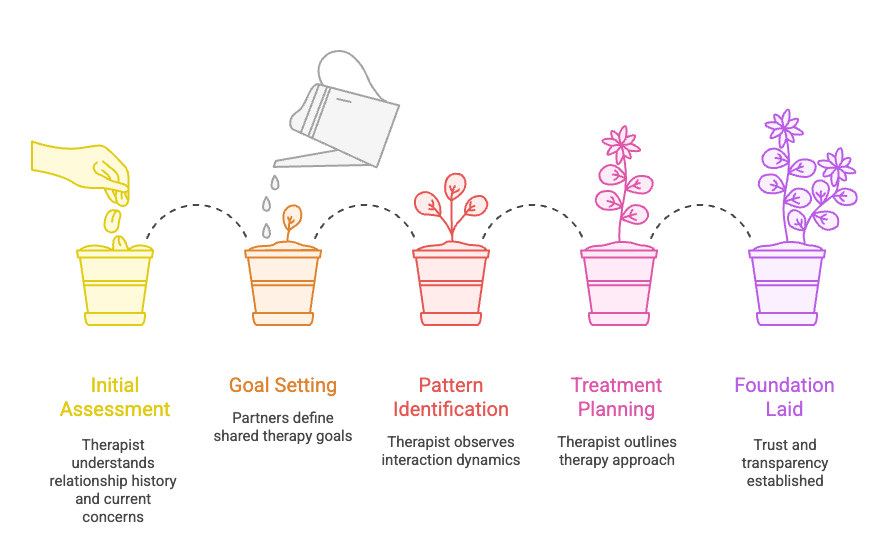
During the first few sessions, expect:
Relationship history: The therapist will ask about how you met, what initially drew you together, significant milestones, and how your relationship has evolved. This helps identify strengths to build on and understand context for current challenges.
Current concerns: You'll discuss the relationship problems bringing you to couples therapy. The therapist may ask questions like: "What's happening that made you decide to start therapy now?" or "What does each of you hope will be different after marriage counseling?"
Individual priorities: It's common for couples to have different relationship goals when starting therapy. One partner might want to rebuild trust after infidelity, while the other wants to improve communication. A marriage and family therapist will help explore each partner's perspectives and work toward shared goals.
Pattern identification: Even in the first session, a skilled therapist begins noticing how you interact—your communication styles, emotional responses, and the relationship dynamics that play out between you.
Treatment planning: By the end of the first few sessions, the therapist should provide a sense of how therapy will proceed. A clear treatment plan and knowing the couple's end goals will help the therapist stay on track throughout the sessions.
Logistical details: The therapist will explain session frequency (often weekly at first), duration (typically 50-60 minutes), their approach, and what to expect from the therapeutic process. If cost is a concern, ask about couples therapy cost and whether your insurance covers relationship counseling.
Some therapists meet with each partner individually for part of the first session to understand each person's perspective. However, therapists should never keep information from one of the participants in couples counseling, even if it's a deeply personal topic—this maintains trust and transparency in the therapeutic relationship.
How Sessions Are Structured: Creating a Supportive Environment
Once therapy is underway, couples therapy sessions typically follow a structure designed to maximize progress while maintaining emotional safety.
A typical session might include:
Check-in: The therapist asks what's been happening since your last session. Did you practice any skills you learned? Did any conflicts arise? How are things feeling between you?
Session focus: Based on your treatment plan and current needs, the therapist guides the conversation toward specific relationship goals. This might involve discussing a recent conflict, practicing new communication techniques, or exploring deeper emotional patterns.
Guided dialogue: Rather than letting you argue the way you might at home, the therapist structures the conversation. They might pause you to point out unhelpful patterns, ask clarifying questions, or redirect communication that's becoming unproductive.
Skill-building: The therapist teaches and practices specific techniques during the session. This could include active listening exercises, identifying emotional triggers, or learning to express emotional needs more effectively.
Homework: Most therapists assign tasks to practice between sessions. This might include having a specific conversation, noticing certain patterns, or practicing effective communication skills you learned.
Session wrap-up: The therapist summarizes key insights, checks in about how the session felt, and ensures both partners are in a stable emotional place before leaving.
It's important to maintain emotional safety during therapy sessions to prevent triggering blaming or conflict. If a session becomes too heated and strong emotions emerge, a skilled therapist will intervene to bring the temperature down and refocus on productive dialogue.
Common Techniques Therapists Use
Different therapists use different approaches, but many techniques are common across various types of couples therapy and marriage counseling:
Communication Exercises
Active listening and reflection: One partner speaks while the other listens without interrupting, then reflects back what they heard. This ensures understanding before responding and helps resolve conflict constructively.
Speaker-listener technique: Partners working together take turns being the speaker and listener, following specific rules to prevent escalation and promote understanding.
Paying attention to body language: Therapists help partners notice nonverbal cues and how physical positioning, facial expressions, and tone affect communication.
Identifying Patterns and Cycles
Recognizing negative cycles: Therapists help you see recurring interaction patterns. For example, when one partner pursues discussion, the other withdraws, which makes the first partner pursue harder, causing more withdrawal—a common cycle in marriage therapy.
Externalizing the problem: Instead of "you have an anger problem," the therapist might frame it as "anger shows up in your relationship and affects both of you." This helps partners work together against the problem rather than against each other to resolve relationship problems.
Tracking emotional triggers: Understanding what situations, words, or behaviors trigger strong emotions in each partner and why. This includes exploring how past experiences influence current patterns.
Identifying family dynamics: How childhood experiences, past relationships, or family therapy history shape current relationship expectations and reactions.
Building Emotional Connection
Expressing vulnerability: Therapists create a safe space for partners to share deeper fears, needs, and longings that often hide beneath surface conflicts.
Developing empathy: Helping each partner understand the other's emotional experience, even when they disagree about a situation. This can help address negative feelings that have built up over time.
Creating new positive experiences: Some therapists assign activities designed to rebuild connection, like regular date nights, appreciation practices, or shared projects.
Exploring emotional needs: Helping partners understand and express what they need to feel loved, secure, and valued in the relationship.
Different Approaches to Couples Therapy
While the core elements above are common, specific techniques vary based on the therapeutic approach. Understanding different methods can help you know what to expect from couples counseling:
Emotionally Focused Therapy (EFT)
Emotionally Focused Therapy is based on attachment theory and focuses on helping couples create a secure emotional bond. Research shows that EFT produces medium to large improvements in relationship satisfaction.
What happens in EFT sessions:
Identifying negative interaction patterns that create emotional distance
Accessing deeper emotions and unmet attachment needs underlying surface conflicts
Helping partners express these deeper feelings and needs to each other
Facilitating new interactions where partners respond with understanding and support
EFT is particularly helpful for couples who feel emotionally disconnected or where one or both partners struggle with trust or feeling secure in the relationship.
The Gottman Method
Based on decades of research on what makes relationships succeed or fail, the Gottman Method focuses on building friendship, managing conflict constructively, and creating shared meaning. Studies show that the Gottman program improves relationship quality and is equally effective whether delivered in person or online.
What happens in Gottman Method sessions:
Assessment using research-based tools to identify relationship strengths and areas for improvement
Building "Love Maps" (deep knowledge of each other's inner world)
Sharing fondness and admiration exercises
Learning the "Four Horsemen" (criticism, contempt, defensiveness, stonewalling) and their antidotes
Developing conflict resolution skills and learning to accept differences
Creating rituals of connection and shared meaning
The Gottman Method is comprehensive and structured, making it good for couples who appreciate research-backed approaches and clear frameworks. It's beneficial for married couples and those in committed romantic relationships.
Cognitive-Behavioral Couple Therapy (CBCT)
CBCT focuses on changing negative interaction patterns, improving communication skills, and addressing unhelpful thoughts about the relationship.
What happens in CBCT sessions:
Identifying negative thought patterns that lead to conflict
Learning effective communication techniques and problem-solving skills
Changing behaviors that contribute to relationship distress
Practicing new communication and conflict resolution strategies during sessions
Homework to practice skills between sessions
CBCT is practical and skills-focused, good for couples who want concrete tools and structured approaches.
Integrative Behavioral Couple Therapy (IBCT)
IBCT combines traditional behavioral techniques with acceptance-based strategies. Studies show that 50% of couples receiving IBCT demonstrate clinically significant improvement that is maintained 5 years after treatment.
What happens in IBCT sessions:
Working to change problematic behaviors
Also helping couples accept differences that cannot be changed
Using acceptance to reduce blame and increase understanding
Building tolerance for partner behaviors that cause conflict
Creating intimacy through understanding differences rather than demanding change
IBCT is helpful when couples struggle with differences in personality, values, or needs that may not be resolvable but can be navigated with greater acceptance.
We often have couples ask us which therapy approach is "best" for their situation. The truth is, most evidence-based approaches are highly effective. At Providence Therapy Group, our licensed therapists are trained in multiple modalities and often integrate techniques from different approaches based on what each couple needs. What matters most isn't the specific method—it's finding a licensed marriage and family therapist you both trust and being willing to engage openly in the process.
What About Individual Sessions?
Many couples wonder whether they'll ever speak privately with the therapist, and the answer varies by therapist and situation.
Some therapists occasionally meet individually with each partner to:
Better understand each person's perspective without the other present
Address individual mental health concerns that might be hard to raise in joint sessions
Assess for individual mental health issues that might benefit from individual therapy alongside couples work
However, maintaining transparency is crucial: Therapists should never keep secrets between partners. If you share something in an individual session, the therapist will typically encourage you to bring it to a joint session or may require that information be shared to continue couples therapy ethically.
If you have sensitive information (like an affair that hasn't been disclosed), it's important to discuss with the therapist at the start how they handle such situations, as policies vary.
Online Couples Therapy: How It Compares to In-Person Sessions
Many couples now have the option of online couples therapy, and you might wonder how virtual sessions differ from in-person ones.
Research is reassuring: Studies show that online Gottman Method therapy is equally effective as in-person therapy. Many online couples therapy services accept insurance, making therapy more affordable for couples.
What's similar in online therapy:
The therapeutic process, techniques, and structure remain the same
The therapist's role and approach don't fundamentally change
You still work on communication skills, patterns, and emotional connection
Session length and frequency are typically the same
What's different:
Online couples therapy offers more flexible scheduling options compared to traditional in-person therapy
You can attend from home, which some couples find more comfortable or convenient
Some nonverbal cues may be slightly harder for therapists to observe via video
Online couples can communicate with their therapist through messaging and live video sessions
Many online therapy platforms allow couples to switch therapists at no extra cost if they feel the need to find a better fit
Whether online or in-person, the key to success is the same: both partners being willing to engage honestly in the process with a licensed marriage and family therapist they trust.
Common Concerns About Couples Therapy Sessions
"What if the therapy session isn't feeling helpful?"
If therapy isn't feeling productive, you can ask the therapist for feedback or to focus on different topics. Good therapists welcome this conversation. Couples therapy isn't a quick fix and doesn't guarantee a specific outcome, so adjusting the approach is normal.
"What if my therapist is making me feel uncomfortable?"
This is nuanced. If your therapist is making you feel uncomfortable, it's not necessarily a bad thing, as they could be guiding you into difficult emotions that are important for your healing and growth. However, if you feel genuinely unsafe, unheard, or disrespected, those are valid reasons to discuss concerns with your therapist or find a new one.
"What if one partner doesn't really want to be there?"
Therapy works best when both partners are open to the process, but even if one partner is more hesitant, progress can still happen. Often, the reluctant partner becomes more engaged as they experience the supportive environment and see that the therapist truly remains neutral.
"How often will we need to go, and for how long?"
Sessions typically occur weekly or biweekly. The frequency of couples therapy sessions can vary, with many couples starting with weekly sessions and then shifting to biweekly or monthly as they progress. Many couples participate in 12 to 20 sessions, though this varies based on the severity of relationship distress and your specific goals.
"Will we have homework?"
Yes, most therapists assign tasks between sessions. This might include practicing communication skills, having specific conversations, or trying new behaviors. The practice between sessions is often where the most growth happens when partners working together apply what they learned.
What Makes Couples Therapy Effective?
Understanding what contributes to successful relationship counseling can help you maximize your experience:
Both partners being willing to participate: While one partner can begin treatment with more enthusiasm, the process is most effective when both partners are open and honest about their feelings and concerns.
Choosing a qualified therapist: Look for licensed therapists with specific training in relationship counseling. A master's degree in marriage and family therapy or relevant credentials like Licensed Marriage and Family Therapist (LMFT) indicates specialized training.
Being honest about issues: Being open and honest about the relationship issues you are facing can help the therapist create a suitable treatment plan. This includes discussing difficult topics like infidelity, communication breakdowns, or unresolved conflicts from the past.
Practicing between sessions: The real change happens when you apply what you learn in therapy to your daily life. Partners working together to practice new skills between sessions see better results and find a clearer path forward.
Giving it time: Research shows sustained improvements occur over time. Don't expect overnight transformation—relationship change is a process.
Having realistic expectations: Couples therapy provides a safe space for partners to navigate difficult conversations and gain clarity about their relationship, but it doesn't guarantee a specific outcome. Some couples strengthen their relationship, some decide to separate more amicably, and some gain tools even if significant challenges remain.
From a clinical perspective, one of the most important factors we see in successful couples therapy is both partners' willingness to be vulnerable and honest. We often tell couples that the sessions themselves are just one hour a week; the real work happens in how you apply what you learn in daily interactions. Couples who practice new communication skills and remain curious about their patterns, even when it's uncomfortable, tend to see the most significant improvements.
Moving Forward: Is Couples Therapy Right for You?
Couples therapy is beneficial for relationships at all stages—not just those in crisis. Many couples seek therapy to strengthen an already solid healthy relationship or to navigate new phases of life together, such as becoming parents, retirement, or managing significant challenges.
Consider couples therapy if you're experiencing:
Frequent conflicts or feeling stuck in the same arguments
Communication difficulties or feeling misunderstood
Emotional distance or lack of intimacy
Trust issues, whether from infidelity or other breaches
Life transitions that are straining your romantic relationship
Differences in values, goals, or approaches to important issues
A sense that you're growing apart or living parallel lives
Remember: Couples seek therapy for many reasons, and seeking help is a sign of commitment to your relationship, not failure. Marriage counseling and relationship counseling are designed to help you navigate difficult truths safely and constructively, with a licensed marriage and family therapist creating a structured environment for growth. Every person deserves a relationship where they feel heard, valued, and understood.
If you're in the Providence, Cumberland, Cranston, or surrounding Rhode Island areas, the licensed therapists at the Providence Therapy Group are here to help. Our licensed marriage and family therapists are trained in evidence-based approaches to relationship counseling and couples counseling. We offer both in-person and online therapy options to fit your needs. Schedule an appointment to begin working toward a healthier relationship.
Disclaimer: This article is for educational purposes only and is not a substitute for professional medical advice, diagnosis, or treatment. Always seek the advice of your physician or qualified mental health provider with any questions you may have regarding a mental health condition. If you are in crisis or experiencing thoughts of self-harm, please call 988 (Suicide and Crisis Lifeline) or go to your nearest emergency room.