
Is Anxiety After a Breakup Normal? | Understanding Post-Breakup Anxiety
Understanding Anxiety After a Breakup: Is It Normal to Feel This Way?

If you’ve been feeling anxious since your breakup—racing thoughts, trouble sleeping, constant worry—you might be wondering if something is wrong with you. Anxiety often begins soon after a breakup, especially when emotional triggers like seeing a former partner or recalling shared memories are present. The short answer is no. Experiencing anxiety after a breakup is completely normal. It’s one of the most common emotional responses to the end of a serious relationship and a romantic relationship breakup, and the depth of this loss can make anxiety especially intense. Understanding why it happens can help you feel less alone and more equipped to manage it. Your mental health matters, and recognizing that anxiety after a breakup is normal is an important first step in healing.
Why do I feel so anxious after my breakup?
The end of a romantic relationship creates real changes in your brain chemistry that contribute to anxious feelings. When you’re in a relationship, your brain gets used to certain patterns—the comfort of having someone there, shared routines, future plans. When that suddenly ends, your brain registers this as a threat, triggering your body’s stress response. Anxiety after a breakup is one of the most common reactions to losing a relationship.
Post-breakup anxiety is your nervous system reacting to major life changes. You’ve lost not just a romantic partner but also daily routines, social connections, and a sense of security about the future. This absence of familiar routines plays a major role in triggering anxiety. It's common to feel overwhelmed by the intensity of emotions and changes after a breakup. Your brain is essentially asking “What happens now?” and that uncertainty can feel overwhelming. Self care and understanding can help you manage these feelings.
Attachment and breakup distress are closely linked—your attachment style can influence how intensely you experience emotional pain and anxiety after a breakup. People with anxious attachment patterns may feel especially distressed, while others may experience different levels of breakup-related distress.
After a breakup, negative emotions such as sadness, anger, and anxiety are often heightened, making it even more challenging to cope with daily life.
If you already have a mental health condition like generalized anxiety disorder, panic disorder, or obsessive-compulsive disorder, you may find that breakup distress feels especially intense. Mental health disorders, mental health issues, and mental illness can all impact the severity of anxiety after a breakup. Pre-existing anxiety disorders can amplify anxiety after a breakup, and anxiety can make it harder to manage relationship changes. Post-breakup anxiety often feels more overwhelming when mental health conditions are already present. Understanding how anxiety disorders interact with relationship loss can help you know what to expect.
Self-doubt often arises after a breakup, contributing to anxiety and negative thought patterns that make it harder to move forward.
Unhealthy coping mechanisms, such as substance use or avoidance, can make things worse. Maladaptive coping strategies like rumination or self-blame can worsen anxiety if not addressed, so recognizing and working through these patterns in therapy is important.
In our practice working with clients in Providence, Cranston, and Cumberland, we see many people who feel embarrassed about how anxious they are after a breakup. They think they “should be over it” or that their reaction is excessive. We remind them that breakups are significant losses, and anxiety is a completely normal response. The intensity of your anxiety doesn’t mean you’re weak or broken—it means you’re human and you cared deeply about the relationship.
Attachment Anxiety and Breakups
Attachment anxiety can significantly intensify the emotional pain and anxiety symptoms experienced after a breakup—and if you tend to worry about being abandoned or need frequent reassurance in relationships, you may have what psychologists call an anxious attachment style. When a romantic relationship ends, this attachment anxiety can make breakup distress feel overwhelming, as the loss triggers deep fears and uncertainty about the future. Picture this: your nervous system goes into overdrive, and suddenly you're not just dealing with heartbreak—you're wrestling with existential dread about whether you'll ever feel secure again.
Understanding your attachment patterns is an important step in managing anxiety after a breakup—and here's why that matters so much. Recognizing how attachment anxiety influences your reactions can help you identify when you might need extra support (rather than white-knuckling through the pain alone). Mental health professionals are skilled at helping individuals explore their attachment styles and develop healthier ways to cope with emotional pain—think evidence-based strategies that actually work, not just generic "time heals all wounds" advice. With the right coping strategies, you can learn to manage anxiety, build self-awareness, and foster more secure relationships in the future. Taking the time to understand your attachment style is a powerful way to begin healing and reduce the intensity of breakup distress—because knowledge really is power when it comes to emotional recovery.
What are the normal symptoms of anxiety after a breakup?
Breakup anxiety manifests through both emotional symptoms and physical symptoms, and experiencing both is completely normal. Emotionally, you might feel sadness, irritability, fear of being alone, constant worry about the future, or experience anxious thoughts that seem hard to control. You might ruminate—repeatedly replaying events or mistakes—or feel waves of panic about what comes next. Reflecting on a past relationship can intensify anxious thoughts and emotional distress, making it harder to move forward. Post-breakup anxiety often includes these emotional responses alongside physical changes in your body. Strategies like mindfulness, distraction, and seeking professional help can be effective in managing anxious thoughts during this time.
Physical symptoms are just as common and can include:
Difficulty sleeping or sleeping too much
Stomach pain or digestive issues
Racing heart or chest tightness
Trouble focusing or concentrating
Changes in appetite
Feeling restless or on edge
Fatigue even when resting
These physical symptoms happen because anxiety triggers your sympathetic nervous system—your body’s fight-or-flight response. Your body can’t always tell the difference between a physical threat and an emotional one, so it responds to the loss as if you’re in danger. Physical symptoms of anxiety after a breakup are your body’s way of processing the stress.
It’s important to know that having these symptoms doesn’t mean something is medically wrong with you. They’re your body’s natural response to emotional distress and major life changes. Many people experience a dip in mood and motivation after a breakup, which can lead to anxiety symptoms that feel alarming but are part of the normal grieving process.
We often tell clients that anxiety symptoms after a breakup are signals, not flaws. Your racing heart isn’t broken—it’s telling you that you’re processing something significant. Your trouble sleeping isn’t a personal failure—it’s your mind trying to make sense of a major change. Understanding that these symptoms are normal and temporary can reduce the additional anxiety that comes from worrying about the symptoms themselves. The symptoms don’t define you; they’re just your body’s way of adjusting to loss.
How long does post-breakup anxiety normally last?

There’s no single timeline for how long anxiety after a breakup lasts, and that’s completely normal too. Some people feel better within a few weeks, while others experience anxiety symptoms for several months. The length often depends on how long the relationship lasted, how it ended, your attachment style, and whether you have other mental health conditions such as post traumatic stress disorder.
Research shows that people with anxiety disorders often report lower satisfaction in their relationships and may take longer to adjust after breakups. If you had attachment anxiety during the relationship—constantly worrying about abandonment or needing frequent reassurance—you might experience more intense post-breakup distress. Mental health conditions like generalized anxiety disorder can extend the healing timeline, and that’s okay.
What matters most isn’t following a specific timeline but noticing whether your anxiety is gradually improving. In the first few weeks, it’s normal for anxiety to feel constant and overwhelming. As time passes, you should start having more good days mixed in with the hard ones. Regaining life satisfaction is a key part of recovery, as improved coping skills, emotional support, and personal growth can help restore your overall sense of happiness and fulfillment after a breakup. If your anxiety remains just as intense after several months, or if it significantly interferes with daily life, that’s a sign you might benefit from professional support.
The grieving process after a breakup brings common emotional challenges including sadness, anger, denial, bargaining, and anxiety. These emotions don’t follow a neat linear path—you might feel better one day and terrible the next, and that’s normal.
Is it normal to have panic attacks after a breakup?
Yes, experiencing panic attacks after a breakup can be a normal response to intense emotional distress, though not everyone experiences them. These involve sudden, intense fear accompanied by physical symptoms like racing heart, shortness of breath, dizziness, or feeling like you’re losing control. They can be terrifying, especially if you’ve never had one before.
Breakups can trigger this response because they activate your body’s stress response. The uncertainty and loss create such intense anxiety that your nervous system goes into overdrive. If you’re prone to anxiety or have panic disorder, you’re more likely to experience this during stressful times. Individuals with social anxiety disorder may also experience heightened anxiety or panic symptoms after a breakup, as the emotional upheaval can intensify existing anxiety conditions.
Having these episodes doesn’t mean you’re having a breakdown or can’t handle the breakup. They’re an extreme version of your body’s anxiety response. However, if you’re having them frequently (more than a few per week) or they’re preventing you from functioning, it’s important to reach out to a mental health professional.
In our experience working with clients in the Providence area, panic episodes after breakups often catch people completely off guard. Many have never experienced one before and fear something is seriously wrong. We help them understand that while these are frightening, they’re time-limited and not dangerous. Learning grounding techniques and understanding what’s happening in your body can make them less scary and easier to manage when they occur. Remember, an intense episode is temporary. Post-breakup anxiety can trigger these responses, especially if you have anxiety disorders.
When should I worry about my post-breakup anxiety?
Most anxiety after a breakup is normal and will improve with time and support, but there are signs that indicate you should seek professional help. Consider reaching out to a mental health professional if you’re experiencing:
Anxiety that remains intense for more than a few months without improvement
Panic episodes that are frequent or debilitating
Inability to function at work, school, or daily activities
Complete withdrawal from friends and family
Thoughts of self-harm
Using alcohol or unhealthy habits to cope
Physical symptoms that are severe or don’t improve
Seeking help doesn’t mean your anxiety isn’t “normal”—it means you’re being smart about getting support. Anxiety disorders are treatable, and in some cases, common medications such as selective serotonin reuptake inhibitors (SSRIs) or benzodiazepines may be recommended alongside therapy to help manage post breakup anxiety. Getting help early can prevent symptoms from becoming more severe. Evidence-based therapies like Cognitive Behavioral Therapy (CBT) has strong evidence for treating anxiety, and Dialectical Behavioral Therapy (DBT) is also effective for helping individuals develop healthy coping skills, regulate emotions, and improve relationships after a breakup. Your mental health matters, and a mental health professional can provide guidance tailored to your situation. When anxiety disrupts daily life, professional support becomes essential. Developing coping skills is crucial to manage post breakup anxiety and foster emotional resilience.
Online therapy is a convenient option if in-person care feels overwhelming, and support groups can provide connection with others who understand what you’re going through. Group therapy is also a valuable resource for connecting with people facing similar challenges. The Providence Center provides mental health services for residents of Providence, and NAMI Rhode Island offers free virtual support groups for adults living with mental health conditions. Local resources for therapy in Providence include online options like BetterHelp or Talkspace, and directories such as Psychology Today or Grow Therapy.
Self-Care and Relaxation
Prioritizing self-care and relaxation techniques is your lifeline for managing post-breakup anxiety—think of it as building a sturdy foundation while your emotional world feels like it's shifting beneath your feet. Engaging in activities that actually nurture both your body and mind—regular exercise, meditation, or just spending time outdoors—can help dial down those anxiety symptoms and get you back on steadier ground. And here's the thing: maintaining a healthy diet and consistent sleep schedule isn't just feel-good advice—it's practical armor against letting anxiety spiral into something that hijacks your daily life.
Picture this: incorporating relaxation techniques like deep breathing exercises, yoga, or guided meditation as your personal reset button that calms your nervous system and eases those very real physical symptoms that breakup anxiety loves to throw at you. These practices anchor you in the present moment and help you ride out the emotional ups and downs instead of getting swept away by them. Not sure where to start? That's completely normal. A mental health professional can map out self-care and relaxation strategies that actually fit your unique situation—no one-size-fits-all approaches here. By making self-care a non-negotiable priority, you're not just protecting yourself from the long-term fallout of chronic anxiety; you're actively supporting your healing process and giving yourself the space to rebuild after a breakup.
Emotional Support and Anxiety

Emotional support is—let's be honest—the lifeline for anyone drowning in those post-breakup waves of anxiety and emotional chaos. So what happens when you actually reach out? Connecting with friends, family, or a mental health professional doesn't just throw you a life preserver—it provides the comfort, validation, and reassurance you need to stop feeling like you're treading water alone. Sharing your feelings and experiences with others (yes, even the messy, complicated parts) not only helps you process the breakup, but also reminds you that you're not navigating this stormy emotional aftermath solo—and that you're definitely not the first person to feel like your world got turned upside down.
Here's where it gets interesting: social support can actually help you challenge those spiraling negative thought patternsand practice self compassion—both of which are absolutely crucial for managing the anxiety that loves to hijack your brain after a relationship ends. Whether you're talking with a trusted friend (the one who actually listens instead of immediately jumping to "you're better off without them"), joining a support group, or seeking guidance from a mental health professional, reaching out for emotional support can make a significant difference in getting back in the driver's seat of your recovery. By allowing yourself to lean on others—and yes, that means actually accepting help instead of white-knuckling through it alone—you can build resilience and discover healthier ways to cope with the emotional wreckage that breakups leave behind.
Building Resilience
Building resilience is the real game-changer when it comes to bouncing back from breakup anxiety and moving forward with genuine strength. Resilience means developing coping strategies that actually work, learning from the messy experiences that knocked you sideways, and keeping a hopeful outlook even when emotional pain feels like it's hijacking your whole system. Practicing mindfulness—like anchoring yourself in the present moment and watching your thoughts without letting them steer the ship—can help you manage those spiraling negative thoughts and dial down the anxiety that keeps you up at night.
Reframing those brutal negative thoughts and diving into activities that genuinely support your emotional well-being—think creative hobbies, volunteering, or connecting with people who actually get it—can also foster real resilienceinstead of just putting on a brave face. Mental health professionals can guide you through developing these skills and walk alongside you throughout the healing process, offering that judgment-free space where you can sort through what's really going on beneath the surface. By focusing on building resilience, you can navigate post-breakup anxiety without letting it completely derail you—and emerge from the whole experience with greater self-awareness, confidence, and the kind of emotional strength that actually sticks.
What can I do to manage normal post-breakup anxiety?
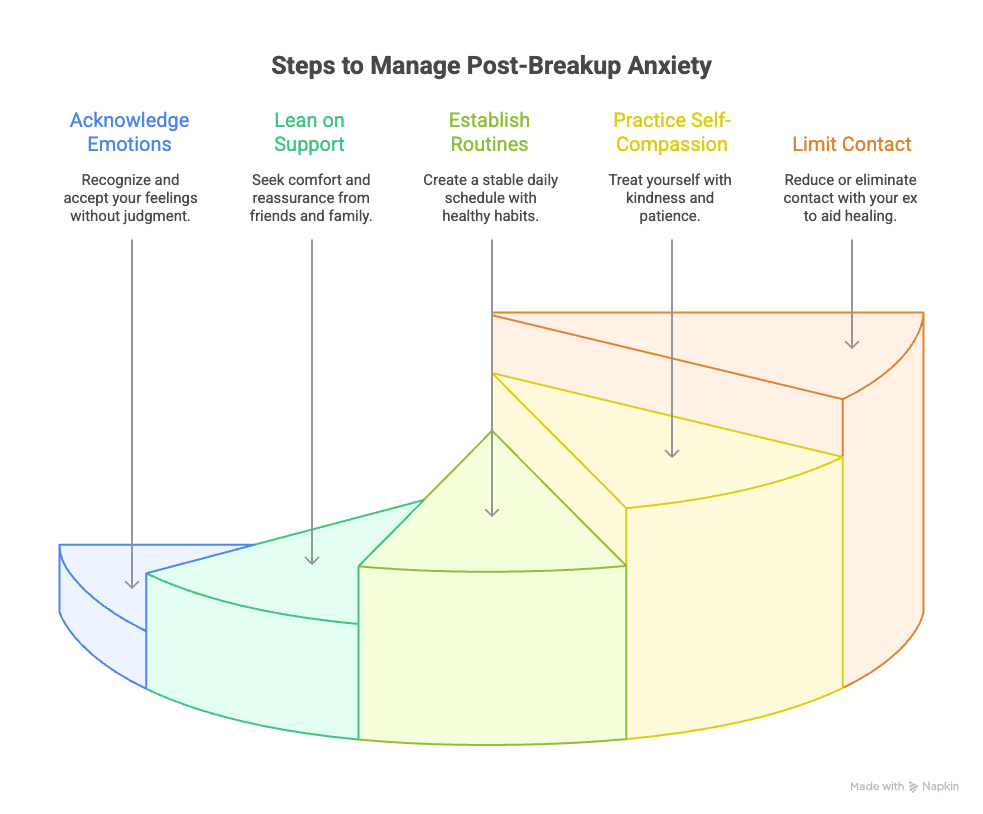
Understanding that your anxiety is normal is the first step; the second is giving yourself tools to manage it. While some anxiety is inevitable after a breakup, you don’t have to suffer through it without support. Learning to manage post breakup anxiety through effective coping skills is essential for emotional healing and resilience. Healthy coping strategies can help you manage anxiety and foster healing.
Acknowledge your emotions without judgment. One of the most effective coping strategies is simply allowing yourself to feel what you’re feeling. Trying to suppress or ignore anxiety often makes it worse. Tell yourself “I’m feeling anxious right now, and that’s okay.” It’s also important to recognize and avoid maladaptive coping strategies, such as rumination or self-blame, which can actually worsen anxiety after a breakup.
Lean on your support system. Reaching out to friends and family offers connection and reassurance during difficult times. Social support can help buffer against psychological distress and remind you you’re not alone.
Establish healthy routines. Create a new daily schedule with consistent sleep, healthy eating, and regular physical activity. These routines bring stability after the disruption and help regulate your nervous system. Exercise has been linked with reduced anxiety symptoms. Self care through routine helps restore a sense of normalcy to daily life.
Practice self-compassion. Treat yourself with the same kindness you’d offer a close friend going through a breakup. Self-compassion means acknowledging that this is hard, that you’re doing your best, and that healing takes time. Self care for your mental health includes being patient with yourself.
Limit contact with your ex. Reduce or cut off contact to aid healing. Seeing them or checking their social media often triggers fresh waves of anxiety and prevents your nervous system from calming down.
If your anxiety continues to feel unmanageable despite these coping strategies, don’t hesitate to reach out to a therapist. Managing post-breakup anxiety is easier with professional support, and seeking help is a sign of strength, not weakness.
Reflecting on your breakup and learning from the experience can help you set healthier boundaries and improve future relationships.
If you’re struggling with anxiety after a breakup and want professional support, the therapists at Providence Therapy Group are here to help. Schedule an appointment to get started.
Disclaimer: This article is for educational purposes only and is not a substitute for professional medical advice, diagnosis, or treatment. Always seek the advice of your physician or qualified mental health provider with any questions you may have regarding a medical or mental health condition. If you are in crisis or experiencing thoughts of self-harm, please call 988 (Suicide and Crisis Lifeline) or go to your nearest emergency room.