
Signs of Caregiver Burnout: When Caregiving Stress Becomes Something More
If you're caring for an aging parent, a spouse with a chronic illness, or a family member with disabilities, you're probably familiar with caregiver stress. You feel pulled in multiple directions, exhausted at the end of the day, and like there's never enough time for everything that needs to get done.
But what happens when that stress crosses into something more serious? When does ordinary caregiving stress become caregiver burnout?
Caregiver burnout is a state of emotional, physical, and mental exhaustion caused by the prolonged stress of caregiving, often developing gradually as the demands of caring for a loved one accumulate over time. Over 60% of caregivers experience symptoms of burnout at some point, including fatigue, sleep issues, and anxiety.
If you're reading this and thinking "that sounds like me," you're not alone. Approximately 24 million family caregivers provide help to older adults in the United States, and more than half report burden related to their caregiving role (Wolff et al., 2025). Understanding the signs of caregiver burnout — and knowing when to get help — can protect your health and the quality of care you provide.
What Is Caregiver Burnout?
Caregiver burnout refers to more than just feeling tired or stressed. It's a measurable condition with three core dimensions:
1. Emotional exhaustion: Feeling completely drained, overwhelmed, and unable to give any more of yourself emotionally. This is the hallmark of caregiver burnout and often the first sign. You might feel like you have nothing left to give.
2. Depersonalization: Feeling emotionally detached from the person you care for. You may notice yourself becoming cynical, impatient, or going through the motions of caregiving without genuine connection. This can be deeply distressing, especially when you love the family member you're caring for.
3. Reduced personal accomplishment: Feeling that nothing you do makes a difference, doubting your effectiveness as a caregiver, and losing your sense of purpose or satisfaction in your caregiving duties.
This three-dimensional framework helps us understand how caregiver burnout develops and why it feels different from ordinary stress (Gérain & Zech, 2019).
Caregiver burnout is different from stress. Stress makes you feel like there's too much to do; burnout makes you feel like nothing you do matters. Caregiving stress is characterized by overengagement; caregiver burnout is characterized by disengagement and emotional depletion.
In our work with caregivers at the Providence Therapy Group, we've noticed that many people feel guilty about the depersonalization aspect of burnout. They'll say "I love my mother, so why do I feel so detached from her?" But emotional detachment isn't a character flaw — it's your mind's way of protecting you from complete collapse. Recognizing depersonalization as a warning sign, not a moral failing, is often the first step toward getting help.
How Common Is Caregiver Burnout?
Caregiving is one of the most common — and most demanding — roles in American life:
Approximately 24 million family caregivers provide help to older adults in the United States, up from 18 million in 2011
About 1 in 5 U.S. adults report providing care to a friend or family member
More than half of all caregivers report burden related to their caregiving role
Approximately 40% of caregivers experience caregiver burnout caregiving, which includes symptoms of anxiety, depression, insomnia, and physical health decline
As many as 61% of intensive caregivers (those providing 21+ hours of care per week) experience depression
Many caregivers struggle alone, thinking they should be able to handle everything. But the statistics make it clear: caregiver burnout is not a personal failing — it's a predictable consequence of demanding caregiving responsibilities without adequate support.
Caregiver Burnout vs. Compassion Fatigue: What's the Difference?
You may have heard the term "compassion fatigue" and wondered if that's what you're experiencing. While related, caregiver burnout and compassion fatigue are distinct conditions.
Compassion fatigue, often referred to as secondary traumatic stress, is a condition that affects caregivers who are constantly exposed to the trauma or suffering of others, while caregiver burnout arises from prolonged stress of caregiving responsibilities.
While caregiver burnout develops gradually over time, compassion fatigue can occur suddenly after a particularly traumatic event, making their recovery paths different. For example, if you witnessed your loved one have a serious medical emergency or experienced a crisis related to your loved one's illness, you might develop compassion fatigue quickly.
Both caregiver burnout and compassion fatigue share similar symptoms, but the emotional toll of witnessing another's trauma is a key factor in compassion fatigue, whereas burnout is linked to the stress of caregiving itself — the daily grind of caregiving tasks, managing finances, coordinating doctor's appointments, and taking care of someone else's needs while neglecting your own.
Understanding which condition you're experiencing can help you and your mental health professional choose the right treatment approach.
We consistently see caregivers who experience both burnout and compassion fatigue at different points in their caregiving journey. You might develop gradual burnout from years of daily care, then experience sudden compassion fatigue after witnessing a traumatic medical event. Understanding which you're experiencing matters because the treatment approaches differ — compassion fatigue often requires trauma-focused therapy, while burnout responds well to stress management and boundary work.
Common Signs of Caregiver Burnout

Recognizing the symptoms of caregiver burnout early can help you take action before it becomes severe. Watch for these warning signs:
Emotional Signs of Caregiver Burnout
Feeling overwhelmed constantly — like you can't catch your breath
Persistent sadness, hopelessness, or frequent crying (feeling sad even when nothing specific has happened)
Irritability, anger, or resentment — especially toward the care recipient
Emotional numbness or feeling detached from the person you care for
Losing interest in activities you once enjoyed
Feeling trapped or like there's no way out
Guilt about not doing enough, feeling resentful, or wanting time for yourself
Dreading each day or fantasizing about escaping your caregiving responsibilities
Physical Symptoms of Caregiver Burnout
Common signs of caregiver burnout include feeling overwhelmed, often feeling tired, changes in sleep patterns, weight fluctuations, and losing interest in activities once enjoyed. Caregiver burnout can lead to emotional symptoms such as sadness, irritability, and feelings of helplessness, as well as physical symptoms like headaches and bodily pain.
Additional physical signs include:
Chronic fatigue that doesn't improve with rest
Getting sick more often than usual
Changes in appetite or weight
Trouble sleeping or sleeping too much (you can't get enough sleep no matter how hard you try)
Frequent headaches, back pain, or muscle tension
Neglecting your own health and skipping your own doctor's appointments
Physical strain from lifting, bathing, or assisting with mobility
Behavioral Warning Signs
Withdrawing from friends and social activities
Using alcohol or food to cope
Snapping at the care recipient or other family members
Difficulty concentrating or making decisions
Neglecting your own basic needs (meals, hygiene, physical activity)
Inability to relax even when you have a few hours off
Cutting corners in caregiving tasks because you're too exhausted
Feeling like a bad caregiver because you can't properly care for everyone
Relationship Warning Signs
Increasing conflict with family members about caregiving responsibilities
Growing resentment toward other caregivers who aren't helping as much
Feeling isolated from friends who don't understand your situation
Strain in your marriage or partnership that may benefit from premarital or couples counseling to strengthen communication
Difficulty being emotionally present with your own children, or coping with added stress if you're also navigating perinatal or postpartum mental health challenges
Who Is at Risk for Caregiver Burnout?
Research has identified several factors that increase the risk of caregiver burnout (Adelman et al., 2014):
Caregiver characteristics:
Female sex (women are more likely to experience caregiver burden and depression)
Living with the care recipient
More hours of caregiving — mental health declines noticeably above 10 hours per week, with a twofold increase in clinical-level psychiatric symptoms above 20 hours per week (Smith et al., 2014)
Pre-existing depression or anxiety
Social isolation and lack of social support
Financial stress (one-fifth of caregivers lose employment due to caregiving)
Feeling you had no choice in becoming a caregiver
Poor physical health
Caregiving situation characteristics:
Caring for someone with Alzheimer's disease or dementia (dementia caregivers spend an average of 31 hours per week providing care)
Managing complex medical tasks without adequate training
Caring for someone with behavioral problems
Providing help with health care activities and coordinating medical care
Longer duration of caregiving over an extended period
The Health Consequences of Caregiver Burnout
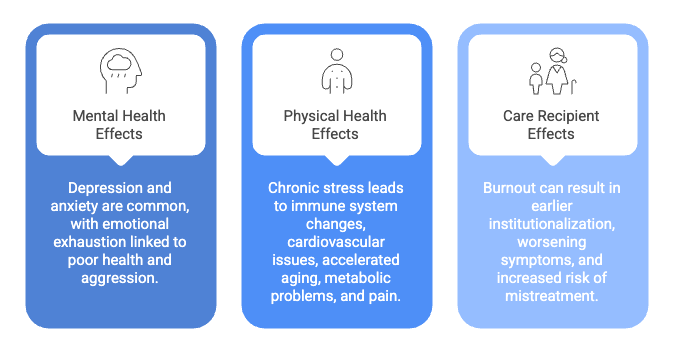
Caregiver burnout can lead to significant negative impacts on both the caregiver's and the care recipient's well being, including increased risk of physical and mental health conditions. Untreated caregiver burnout can severely impact your health and negatively impact the quality of care you provide.
Effects on Your Mental Health
Depression is the most common consequence. Depression prevalence among caregivers ranges from 4% to 51% depending on the population studied, with the highest rates among intensive caregivers (Janson et al., 2022). Anxiety is also common, affecting 2% to 38% of caregivers.
Emotional exhaustion — the central feature of burnout — is significantly associated with depression, poor subjective health, and in severe cases, an increased risk of perpetrating physical aggression toward the care recipient (Gérain & Zech, 2022).
Effects on Your Physical Health
Research has linked chronic caregiving stress to a wide range of physical health effects (Christian et al., 2023):
Immune system changes — increased risk of infection, decreased vaccine effectiveness, slow wound healing
Cardiovascular effects — caregiving stress is associated with high blood pressure, increased cardiovascular risk, and autonomic imbalance
Accelerated aging — caregiving stress has been linked to telomere shortening (a marker of cellular aging), increased inflammation, and changes in cortisol regulation
Metabolic effects — chronic caregiving stress is associated with metabolic syndrome and diabetes
Pain conditions — caregivers have higher rates of back pain and spinal diseases compared to non-caregivers
Additional research confirms that chronic caregiving stress increases risk of infection, decreases vaccine effectiveness, slows wound healing, and accelerates chromosomal aging (Bevans & Sternberg, 2012).
Effects on the Care Recipient
Caregiver burnout doesn't just affect your own health — it can also affect the person you care for:
Earlier institutionalization — caregiver distress is associated with earlier placement of the care recipient in nursing homes or other facilities (Stall et al., 2019)
Worsening symptoms — caregiver distress is associated with worsening behavioral and psychological symptomsin people with dementia (Stall et al., 2019)
Risk of mistreatment — research shows that 33% of family caregivers screened positive for risk of abusive behavior, with caregiver burden being one of the strongest predictors (Orfila et al., 2018). Burnout — particularly emotional exhaustion — has been identified as a direct driver of abuse tendency (Gérain & Zech, 2022).
This is not meant to cause guilt or self blame. It's meant to underscore that taking care of your own health is not selfish — it directly protects the person you care for.
The hardest conversations we have are often about caregiver burden affecting the care recipient. Clients come in feeling ashamed that their exhaustion might be harming their loved one. But here's what we tell them: recognizing that your burnout is affecting the person you care for isn't a reason for more guilt — it's the strongest possible reason to get help. Protecting your health protects them. That's not selfish; it's responsible caregiving.
Caregiver Burnout in Providence: Local Challenges
If you're a caregiver in Providence, Cranston, Cumberland, or Edgewood, you face unique challenges that can worsen caregiver burnout:
Car culture and transportation burden: You're driving your parent to medical appointments in Cranston, picking up prescriptions, and coordinating care across multiple locations. The constant driving and logistics add hours to your daily routine.
Suburban isolation: Unlike urban areas with walkable neighborhoods, Providence's suburban sprawl can leave caregivers feeling isolated. You can't just step out for respite care services — everything requires planning and driving.
Limited flexible work options: Many Providence employers don't offer flexible schedules, forcing you to use vacation time for caregiving duties or risk losing your job.
Dual-income necessity: The cost of living in Rhode Island means most families need two incomes, making it harder to reduce work hours to manage caregiving tasks.
Distance from family support: If your siblings or other family members live in other states, you may be managing caregiving responsibilities alone without the help that could reduce stress.
How to Prevent and Manage Caregiver Burnout
Addressing caregiver burnout requires moving from a mindset of "doing it all" to prioritizing the caregiver's health as necessary for sustainable care. Exploring individual therapy with a Providence therapist alongside other tools can be an important part of this shift. Here are evidence-based strategies for managing caregiver burnout:
1. Use Respite Care
Respite care can provide caregivers with a temporary break from their duties, allowing them to recharge and reduce stress. Many caregivers underuse respite care even though it can make a significant difference.
Respite care options include:
In-home respite (a trained caregiver comes to your home for a few hours)
Adult day programs
Short-term stays in nursing services facilities
Informal respite (family members or friends provide a temporary break)
Local resources in Providence, Cranston, and Cumberland can connect you with respite care. Call the Eldercare Locator at 1-800-677-1116 to find options near you.
2. Join Support Groups
Joining a caregiver support group can help caregivers share their experiences and receive emotional support from other caregivers facing similar challenges. Support groups can reduce feelings of isolation and provide practical coping insights for caregivers.
Support groups are available both in-person and online, making them accessible even when you can't leave the house. Many caregivers also benefit from group therapy that mirrors real-life relationship challenges, offering feedback and support from people facing similar stress.
3. Practice Self-Care Strategies
Self care is essential for managing caregiver burnout. Taking regular breaks, using cognitive behavioral therapy (CBT) to manage anxiety and depression, and engaging in activities you enjoy can help caregivers maintain their mental and physical health, preventing burnout.
Effective stress-relief techniques for caregivers can include meditation, deep breathing, and physical activity. Engaging in mindfulness and relaxation practices can help manage stress for caregivers. Even regular exercise like brief walks can reduce stress and improve mood.
Prioritize your own health:
Keep your own medical appointments
Get enough sleep (sleep deprivation worsens every aspect of burnout)
Eat regular, nutritious meals
Spend time doing things you enjoy
Limit alcohol use
4. Ask for Help and Set Boundaries
Utilizing respite care, prioritizing self care, asking for help, and setting boundaries are effective strategies to prevent caregiver burnout.
Making a specific list of tasks that others can assist with can help caregivers delegate responsibilities and reduce overload. Not everyone can provide hands-on care, but family members can help with managing finances, transportation, meal preparation, or errands.
Set limits on your caregiving responsibilities:
Establish when you're "on" and "off" duty
Protect time for yourself (even 30 minutes in your daily routine)
Learn to say no to other responsibilities when you're at capacity
Be realistic about what you can provide alone
5. Learn Evidence-Based Stress Management
Research shows that mindfulness-based interventions are the most effective psychosocial intervention for reducing overall caregiver burden (Chen et al., 2025). Even brief programs (8 sessions over 4 weeks) can significantly reduce emotional exhaustion and increase self-compassion (Kılıç et al., 2024).
Mindfulness practices you can try (including options you can do through online teletherapy from home):
Mindful breathing (5-10 minutes daily)
Body scan meditation
Mindful walking
Formal Mindfulness-Based Stress Reduction (MBSR) programs
Cognitive-behavioral strategies can help you identify and change negative thoughts that contribute to burnout, such as "I should be able to handle this alone" or "If I take time for myself, I'm being selfish." Caregivers who struggle with rigid standards or self-criticism may also need support in overcoming perfectionism through therapy and self-compassion.
6. Seek Professional Support
A mental health professional can provide specialized support for managing caregiver burnout, including tools for understanding and managing panic attacks and intense anxiety. Consider therapy if you experience:
Persistent symptoms of depression or anxiety
Emotional exhaustion that doesn't improve with rest
Feelings of hopelessness or being trapped
Using alcohol or substances to cope
Feel frustrated, angry, or resentful most of the time
Thoughts of harming yourself or the care recipient
Evidence-based treatments that help caregivers include Cognitive Behavioral Therapy (CBT), mindfulness-based interventions, and multicomponent programs combining psychoeducation, CBT, stress management, and social support (Cheng et al., 2020). These multicomponent programs show the strongest effects on reducing depression and improving well being (Kwok et al., 2025).
Finding Support in Providence
If you're experiencing caregiver burnout in Providence, you don't have to manage this alone.
At the Providence Therapy Group, our therapists understand the unique challenges of caregiving — the prolonged stress, the emotional toll, the physical strain, and the isolation that comes with caring for a loved one. Our approach centers on relationship-based, personalized therapy that builds trust and lasting change. We can help you:
Manage anxiety and depression related to caregiving
Develop coping strategies to reduce stress
Process difficult emotions like guilt, resentment, and grief
Set healthy boundaries with family members
Practice self-compassion and challenge thoughts that feel overwhelming
Navigate decisions about long-term care
Protect your mental and physical health while continuing to provide care
We serve clients throughout Providence, Cranston, Edgewood, Cumberland, and surrounding areas, with options to schedule in-person or online therapy sessions with our licensed therapists.
Taking care of yourself isn't selfish — it's necessary for sustainable care. You can't pour from an empty cup. Seek support from a mental health professional who understands what you're going through.
Schedule an appointment with the Providence Therapy Group today.
If you're in crisis: Call 988 (Suicide and Crisis Lifeline) for free, confidential support 24/7, or call SAMHSA National Helpline at 1-800-662-4357.
For caregiver resources: Call Eldercare Locator at 1-800-677-1116 to connect with local aging services and respite care in Rhode Island.
Disclaimer: This article is for educational purposes only and is not a substitute for professional medical advice, diagnosis, or treatment. Always seek the advice of your physician or qualified mental health provider with any questions you may have regarding a medical or mental health condition. If you are in crisis or experiencing thoughts of self-harm, please call 988 (Suicide and Crisis Lifeline) or go to your nearest emergency room.