
Getting Started with Mindfulness: A Beginner's Guide to Practice.
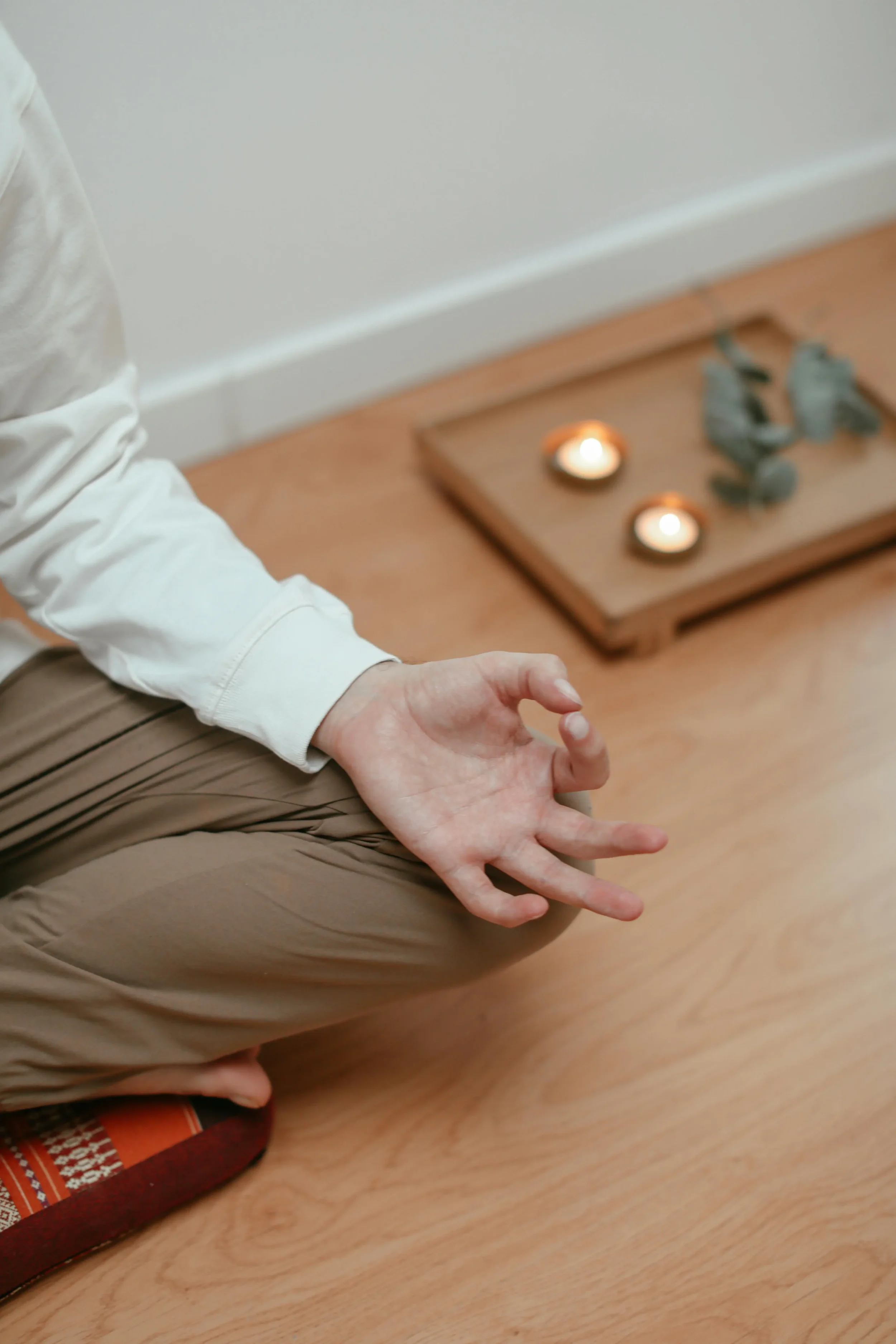
If you've ever felt overwhelmed by racing thoughts, anxiety that won't quit, or the constant buzz of your phone and responsibilities, you've probably heard someone suggest mindfulness. Maybe it sounded nice in theory — sitting quietly, focusing on your breath, finding inner peace. But when you actually tried it, your mind went everywhere except where it was supposed to go. You thought about your to-do list, wondered if you were doing it wrong, and gave up after five minutes.
This is completely normal. Mindfulness isn't about clearing your mind or achieving some perfect state of calm. It's about learning to pay attention to the present moment without judgment — and that's a skill you can develop, regardless of how chaotic your thoughts feel right now.
This guide will walk you through what mindfulness actually is, why it works, and how to start a practice that fits your life — not some idealized version of it.
What Is Mindfulness?
Mindfulness consists of two core elements: awareness and acceptance. It’s the practice of paying attention to what’s happening right now — your breath, your body, body sensations, sounds around you, thoughts and emotions as they arise, and the external environment — without trying to change it or judge it as good or bad.
Mindfulness meditation is different from casual daydreaming or spacing out. Mindfulness-Based Stress Reduction (MBSR), developed by Jon Kabat-Zinn, a program developed by Jon Kabat-Zinn at the University of Massachusetts Medical Center, combines mindfulness meditation, body awareness, and yoga to help you become more mindful and has been shown to improve psychological function and reduce stress; mindfulness and meditation are closely related but not identical practices. You don’t need yoga or a special position — you can practice mindfulness anywhere, from your commute to during meals to a quiet space at home.
Why Mindfulness Has Become Popular in Therapy
Mindfulness is increasingly popular in healthcare, particularly among mental health professionals, as a way to create lasting change in emotional and mental health. It’s not just a wellness trend. Research shows mindfulness can help reduce symptoms of anxiety and depression, with findings supported in clinical psychology and summarized in sources such as Clinical Psychology Review, making it a genuine tool for improving mental health.
Here’s why it works: When you’re anxious or depressed, your mind often gets stuck in two places — replaying the past (rumination) or worrying about the future. Mindfulness practices help break these cycles through mindfulness skills developed with training by helping your attention return to the present moment, where life is actually happening. Through mindfulness training, you develop the ability to notice when your attention has drifted and gently redirect it back to the here and now.
In our practice at the Providence Therapy Group, we’ve found that mindfulness works best when clients understand they’re not trying to achieve a “clear mind” or reach some perfect state. We often tell clients that mindfulness is like strengthening a muscle — the more you practice, the easier it becomes to notice when your mind has wandered and gently bring it back. That ability to notice and redirect without judgment, which supports self-regulation? That’s the real skill, and that’s what creates lasting change.
How Does Mindfulness Actually Work?
Mindfulness changes your brain.Mindfulness techniques have been associated with changes in neural pathways, leading to improved emotional regulation and reduced reactivity to stress. When you’re anxious, certain brain regions related to worry and rumination become overactive. Through mindfulness meditation practice, you can retrain these patterns.
Over time, your brain becomes more efficient at recognizing anxious thoughts and letting them pass rather than getting stuck in them. Mindfulness interventions can lead to changes in neural pathways related to rumination, worry, and emotional reactivity, resulting in positive outcomes for various mental health disorders.
Beyond brain changes, mindfulness builds psychological resilience, helping you manage trauma and chronic stress more effectively. Studies indicate that mindfulness can enhance psychological resilience, helping individuals manage trauma and chronic stress more effectively. Mindful awareness — the moment-to-moment observation of your experience — includes noticing mental events as they arise and strengthens self-awareness and fosters self-acceptance, allowing you to observe your experiences without harsh judgment.
The Research on Mindfulness for Mental Health
The evidence is substantial. Research indicates mindfulness-based interventions can lead to significant reductions in anxiety and depression symptoms, and systematic review findings support these interventions for anxiety and depression while improving overall emotional well-being. For people with depression, Mindfulness-Based Cognitive Therapy (MBCT) incorporates mindfulness practices, including present moment awareness, meditation, and breathing exercises, and has been shown to be especially effective at preventing depressive relapse, particularly in major depressive disorder and recurrent major depressive disorder. It can also help people notice negative thought patterns earlier and take a more mindful approach to them.
Mindfulness helps you relate differently to negative thoughts — you notice them without believing everything they tell you or acting on them automatically. The benefits of mindfulness extend beyond symptom reduction to include greater emotional balance, improved wellbeing, and a more compassionate relationship with yourself in ways that support psychological health.
We’ve noticed that mindfulness is particularly helpful for clients caught in rumination cycles — replaying conversations, worrying about “what ifs,” or analyzing mistakes over and over. Mindfulness teaches them to notice these thought patterns without getting pulled into them. It’s not about pushing thoughts away or forcing them to stop. It’s about observing them without judgment, like clouds passing through the sky, and letting them move on naturally.
Common Barriers to Starting Mindfulness
Before you start, let's address what stops most people:

"My Mind Won't Stop Wandering"
This is the #1 reason people think they're "bad at mindfulness." But here's the truth: your mind is supposed to wander.That's what minds do. The practice isn't about preventing wandering — it's about noticing when it happens and gently bringing your attention back.
Think of it like attention training. Each time you notice your mind has wandered and redirect it, you're actually practicing. You're not failing; you're succeeding. Even experienced meditators have wandering minds.
"I Don't Have Time"
You don’t need to meditate for an hour. Regular daily practice can start with just a few minutes of focused breathing each day. Even five minutes can help you handle stress, not just shift your nervous system. Mindful breathing is often the easiest place to start when time is limited. Some days, three minutes might be all you have — and that still counts.
Consistency beats duration. Fifteen minutes daily outperforms an hour once a month.
"I'm Too Anxious to Sit Still"
If sitting quietly makes you more anxious, that’s useful information. You might try mindful walking as one of several mindful practices — focusing on your feet touching the ground — or mindful eating, slowing down to pay attention to taste and texture. These are legitimate practices that let your body move. Mindful movements can also be a good option if gentle motion helps you feel more settled.
Or try box breathing — inhaling, holding, exhaling, and holding for four seconds each. This structure can feel less overwhelming than open-ended meditation.
Mindfulness training through other mindfulness exercises allows you to find what resonates with your nervous system. Approaches like Cognitive Behavioral Therapy (CBT) can also complement mindfulness by helping you notice and shift unhelpful thought patterns. The healing process begins the moment you recognize that forcing a single approach isn’t necessary — your practice can be as unique as you are.
How to Start: Simple Mindfulness Exercises

Ready to try? Here are three beginner-friendly practices:
1. Mindfulness Breathing
Mindfulness breathing is simple: mindful breathing is a foundational mindfulness technique: sit comfortably, close your eyes, and focus on your breath, breathing in through your nose and out through your mouth. There is a direct connection between the breath and your nervous system during practice. This centers your awareness in the present moment.
Here’s how:
Sit comfortably (chair, cushion, or anywhere stable)
Close your eyes, or soften your gaze downward
Notice the sensation of breathing in through your nose
Notice the pause at the top of the inhale
Notice the sensation of breathing out through your mouth
When your mind wanders (it will), gently notice and return to your breath
Start with just a few minutes. Three to five minutes is plenty, and this kind of mindful meditation can be helpful for reducing stress and may improve well being over time.
2. Body Scan Meditation
A body scan involves lying down or sitting comfortably and moving attention through the physical body, noticing sensations without judgment. This helps reduce tension and promotes relaxation.
This is especially helpful if you hold stress in your body, and it pairs well with approaches like Dialectical Behavior Therapy (DBT) that emphasize emotion regulation and body-based awareness:
Lie on your back or sit comfortably
Close your eyes
Start at the top of your head and slowly move downward: forehead, face, neck, shoulders, arms, chest, belly, legs, feet
At each area, just notice what’s there — bodily sensations such as warmth, coolness, tension, tingling, or nothing at all
Don’t try to change anything; just observe
Continue for 10-15 minutes
This can be especially helpful when stress shows up as physical pain, chronic pain, or tension related to physical health conditions.
Body scans are wonderful because they interrupt the “stuck in your head” feeling and bring awareness back to your body in the present.
3. The 5-4-3-2-1 Grounding Technique
The 5-4-3-2-1 method is a grounding technique, one of several practical mindfulness ideas for moments of overwhelm, that works especially well if you’re anxious or overwhelmed:
Name 5 visible objects you can see (anything — your desk corner, a tree, a crack in the wall)
Name 4 things you can physically feel (feet on the floor, back against the chair, your shirt texture, your hands)
Name 3 things you can hear (traffic, refrigerator hum, someone’s voice)
Name 2 things you can smell (or skip if you can’t)
Name 1 thing you can taste (or just notice your mouth)
This practice pulls you from anxious thoughts about the future into sensory awareness of now, which naturally calms your nervous system and can be especially useful for negative emotions because it redirects attention into the present moment. For some people, practicing these skills in group therapy that mirrors real-life interactions can make grounding and mindfulness feel more accessible and relatable.
Mindfulness in Your Daily Routine
You don’t need dedicated practice time. Mindfulness can be integrated into daily life — pausing before responding to a phone call, for example, cultivates a calmer, more attentive state.
During your commute, mindfulness during commutes involves focusing on physical sensations like your feet on the floor, body sensations such as tension in your shoulders, your breath, and sounds or sights in the environment instead of scrolling through your phone. Teletherapy and online counseling options can make it easier to get support in building these habits into your daily routine. Mindful walking can be practiced in green spaces to enhance the mindfulness experience, or even during a quick walk around your neighborhood. Even in fast-paced urban environments, mindfulness can be practiced anywhere, helping you find moments of calm in busy settings.
During meals, mindful eating encourages focusing on the experience — taste, texture, and sensations of food — which enhances appreciation and awareness. The same kind of attention can be brought to ordinary tasks as part of a holistic approach to wellbeing.
Even combating multi-tasking by focusing on a single activity can enhance mindfulness. When you’re doing dishes, actually do dishes instead of listening to a podcast and thinking about work. Notice the warm water, the smell of soap, the sound of running water.
What we’ve learned from working with clients is that mindfulness doesn’t require perfection or a retreat center. One client practices while walking her dog. Another does it while her coffee brews. Another focuses on his breath during his commute. The practice is less about the specific technique and more about regularly pausing to return your attention to the present moment, wherever you are.
What If Mindfulness Becomes Uncomfortable?
Practicing mindfulness can be done at any time during the day, indoors or outdoors. But it’s worth knowing that mindfulness isn’t universally comfortable for everyone.
For some people, especially those with trauma histories, post traumatic stress disorder, or high anxiety, sitting quietly can feel overwhelming or trigger difficult memories. Working with a therapist who offers personalized, relationship-based therapy focused on lasting change can help you adapt mindfulness so it feels safer. If you experience anxiety, physical sensations you don’t like, or emotional intensity during practice, that’s worth paying attention to. This is especially true during pregnancy or postpartum, when specialized perinatal mental health support in Providence can help you navigate mindfulness safely.
If this happens, tell your therapist. They can help you adjust your practice — maybe you need a more active form like mindful walking, or grounding techniques alongside mindfulness. The goal is to find what works for your nervous system, and approaches such as commitment therapy can make mindfulness feel safer and more flexible.
Building a Regular Practice
Regular practice is key to experiencing mindfulness's benefits. The more you practice mindfulness, the more natural it becomes. Working with an individual therapist in Providence can give you structure and accountability as you build this habit. Here's how to make it stick:
Start small: Commit to mindfulness exercises for 3-5 minutes daily rather than trying for 20 minutes and giving up
Pick a consistent time: Same time each day makes it a habit (many people practice mindfulness right after waking or before bed)
Use a quiet space when possible: Away from your phone and interruptions
Let go of expectations: You're not trying to achieve anything or feel a certain way
Be patient: Give yourself 2-3 weeks of mindfulness meditation daily before you judge if it's working
Finding Support for Your Practice
Mindfulness classes are widely available — online apps, community centers in Providence and Cranston, or through your therapist's office. Structured options like group therapy that helps you feel understood and connected can be a powerful way to practice these skills with others. Some people benefit from learning alongside others; some prefer practicing alone.
If you want a structured program, Mindfulness-Based Stress Reduction (MBSR) is an 8-week course available in many communities that combines meditation, body awareness, and yoga with education about stress.
Your therapist can also integrate mindfulness into your sessions. If you're working with a provider who practices Mindfulness-Based Cognitive Therapy (MBCT), they'll guide you through practices and help you apply them to your specific challenges, and you can schedule in-person or online sessions with a Providence therapist when you're ready to start.
Ready to Begin?
Mindfulness is for everyone — not just naturally calm people or those who are "good at meditation." It's a learnable skill that improves focus by serving as a workout for your attention span, and like any workout, consistency builds strength.
You don't need to be perfect at it. You don't need special cushions or the right playlist. You can practice anywhere — at home, during your commute, or even at work during lunch. If you're a Providence College student, campus and off-campus therapy options can support you as you build these skills.
If you're interested in exploring mindfulness as part of your mental health work, the therapists at the Providence Therapy Group can help. We work with clients throughout Providence, Cranston, Edgewood, and Cumberland to integrate mindfulness into therapy for anxiety, depression, stress, and other challenges.
Schedule an appointment with us to get started, or let us know if you'd like guidance on beginning a practice.
Disclaimer: This article is for educational purposes only and is not a substitute for professional medical advice, diagnosis, or treatment. Always seek the advice of your physician or qualified mental health provider with any questions you may have regarding a medical or mental health condition. If you are in crisis or experiencing thoughts of self-harm, please call 988 (Suicide and Crisis Lifeline) or go to your nearest emergency room.