
When to Seek Relationship Counseling: 7 Signs It's Time

Many couples wonder when to seek relationship counseling. You might question whether your problems are "serious enough" for therapy, or worry that bringing in professional support means your relationship is failing.
The reality is quite different. Research suggests the average couple waits six years after problems begin before seeking professional support—and by then, patterns have often become deeply entrenched. Studies show that around 70% of couples found therapy to be effective, and couples who start therapy when they first notice persistent problems tend to have more options and feel less overwhelmed by the work ahead.
Seeking relationship counseling isn't a sign of failure. It's a proactive step that shows you value your partnership and want to strengthen it. Just as you might see a doctor for physical health concerns before they become serious, marriage counseling can address relationship concerns before they cause lasting damage.
Here are seven signs that indicate it's time to seek couples counseling.
In our work with couples at the Providence Therapy Group, we've noticed that most partners who come to us wish they'd started therapy sooner. They often say the same thing: "We thought we could fix this ourselves" or "We didn't realize it had gotten this bad." What we tell couples is this—seeking help when you first notice persistent problems isn't giving up on your relationship. It's investing in it. The patterns that feel impossible to break on your own often shift remarkably quickly with the right guidance and tools.
1. You're Having the Same Arguments Over and Over Without Resolution
Persistent negative communication includes conversations that frequently turn into arguments without resolution. When you find yourselves having the same argument for the third, fourth, or tenth time—whether it's about household responsibilities, money, time together, or any other topic—it signals that you're stuck in a pattern.
Poor communication patterns create misunderstandings, resentment, and emotional distance between partners. What starts as a specific disagreement becomes layered with past hurts, defensiveness, and frustration. You might notice that even small issues quickly escalate, or that you've developed strategies to avoid certain topics altogether just to keep the peace.
Couples therapy helps identify communication patterns that need support and teaches healthier ways to communicate and move forward together. A trained therapist can help you understand the cycle you're caught in and give you communication skills to break it. Learning to improve communication and develop healthy conflict resolution strategies are primary goals of marriage counseling, and relationship-based therapy at the Providence Therapy Group is designed to support this kind of lasting change.
Warning signs of stuck patterns:
You can predict exactly how arguments will unfold
Issues remain unresolved after multiple discussions
One or both partners feel unheard or misunderstood
Conversations turn hostile or shut down quickly
You're avoiding topics that matter because they always lead to conflict
2. Emotional or Physical Intimacy Has Significantly Declined
A lack of emotional and physical intimacy can signal unmet needs or unresolved stress in a relationship. This goes beyond occasional busy periods or temporary stress—it's a sustained shift in how you connect with each other.
Declining physical intimacy includes a significant drop in physical affection, sexual intimacy, and daily gestures like hugging, kissing, or touching. Changes in your sex life can indicate deeper underlying issues in the relationship. But physical intimacy is only part of the picture. Emotional distance is equally concerning—when you stop sharing your thoughts, feelings, and inner world with your partner.
The "roommate dynamic" occurs when couples co-manage life but lose emotional connection and no longer share their inner worlds. You might handle logistics efficiently—managing schedules, splitting chores, coordinating childcare—but feel more like business partners than romantic partners.
Emotional withdrawal can create distance and disconnect that can seriously damage a relationship, signaling a need for therapy. Couples therapy can help partners reconnect emotionally and rebuild intimacy at a pace that feels safe and supportive for both people. A safe and supportive environment allows couples to discuss intimacy concerns openly and work toward restoring emotional closeness, and premarital and couples counseling with Gottman-trained therapists can help partners strengthen communication and intimacy before and after major commitment milestones.
3. Trust Has Been Broken Through Infidelity, Secrecy, or Dishonesty
Infidelity, secrecy, or major dishonesty can deeply impact a relationship, and couples counseling can help partners navigate the emotional toll of these breaches. Trust issues in a relationship can lead to insecurity, doubt, and stress, making it harder to rebuild a strong connection with your partner.
The longer trust issues go unaddressed, the more difficult it becomes to rebuild and maintain a strong connection with your partner. Even if the betrayal happened months or years ago, unresolved hurt continues to affect your relationship in the present and can negatively affect your mental health.
Rebuilding trust after a breach often requires guidance from a trained therapist to help both partners process emotions and create a path forward together. Couples therapy provides a safe, structured environment to process hurt and understand what happened in cases of trust violations, and working with a licensed psychologist specializing in relationship difficulties and trust issues can be especially helpful when emotions feel overwhelming.
This work isn't easy or quick, but research shows that many couples who experience infidelity can recover and even strengthen their relationship with professional guidance and commitment from both partners.
We approach trust rebuilding with this framework: trust isn't rebuilt through a single conversation or grand gesture—it's reconstructed through hundreds of small, consistent actions over time. In our practice, we see couples who've experienced infidelity make full recoveries, but it requires both partners to show up authentically. The partner who broke trust must demonstrate reliability and transparency. The hurt partner must be willing to gradually lower their defenses. Both are incredibly difficult, but both are possible with commitment.
4. One or Both Partners Frequently Think About Separation
Frequent thoughts about separation or "what if" scenarios regarding a future without a partner should prompt counseling. If you find yourself regularly fantasizing about being single, wondering if you'd be happier apart, or actively researching what divorce would look like, your relationship is in distress.
Considering separation, such as discussing divorce, signals that the relationship needs immediate attention. But thinking about separation doesn't mean your relationship is over—it often means you're in pain and struggling to see a path forward together.
Seeking couples counseling can help you make an informed decision about your relationship's future. A couples therapist can help you explore whether the relationship can be saved, identify what would need to change for one partner or both partners to feel satisfied, and even if you ultimately decide to separate, counseling can help you do so more constructively.
Many couples who feel they're at their "last chance" can still benefit from therapy and see meaningful improvements in their relationship.
5. You're Facing a Major Life Transition That's Straining Your Relationship
Major life transitions such as relocation, parenthood, or job loss can cause tension in relationships, and seeking couples therapy can help navigate these challenges effectively. A major life transition, including having a baby or job changes, can add stress to relationships, and therapy helps couples communicate clearly and support one another during these times.
Common life transitions that benefit from couples counseling: Perinatal and postpartum mental health challenges are a key example, as pregnancy, birth, and early parenthood can significantly strain even strong relationships.
Having a baby or facing parenting challenges
Career changes, job loss, or financial stress
Caring for aging parents or family members while raising children
Serious illness or health issues affecting mental health
Relocation to a new city or state
Blending families or navigating stepparenting
Navigating major life changes can create strain in relationships, and seeking couples therapy can help address unresolved conflicts about values and responsibilities that surface during these changes. Couples therapy can provide tools for managing stress and improving communication during life transitions, helping partners stay grounded and connected when external pressures are high.
Even healthy relationships can struggle under the weight of major life transitions. Getting professional support during transitions isn't a sign of weakness—it's smart prevention that keeps temporary stress from creating permanent distance.
6. Emotional Withdrawal Has Replaced Connection
Emotional withdrawal can create distance and disconnect that can seriously damage a relationship. This looks different from the intimacy decline mentioned earlier—it's more about one partner or both partners shutting down, pulling away, or building walls rather than a mutual drifting apart.
You might notice that your partner has stopped sharing their day with you, seems checked out during conversations, or spends increasing time alone or absorbed in individual activities. Or perhaps you recognize this pattern in yourself—feeling too tired or guarded to open up, going through the motions without really being present.
Avoiding difficult conversations can erode trust and emotional closeness, indicating that couples therapy may be necessary. When emotional withdrawal becomes the norm, couples lose the sense of being a team facing life together. Instead, you become two individuals living parallel lives under the same roof.
A couples therapist can help both partners understand the underlying issues driving the withdrawal, create safety to reconnect, and rebuild the emotional foundation of your relationship through structured relationship work. For some partners, group therapy that focuses on communication and connection can also complement couples work by offering additional support and perspective.
7. You Feel Consistently Unhappy in the Relationship
When one or both partners feel consistently unhappy, it's a clear indicator that relationship problems need attention and therapy may help. This isn't about occasional frustration or temporary dissatisfaction—it's a persistent feeling that something fundamental isn't working.
You might feel lonely even when you're together, experience chronic resentment or anger toward your partner, or notice that being in the relationship drains rather than energizes you. These feelings often build gradually, making it easy to normalize unhappiness or convince yourself that "this is just how relationships are."
But healthy relationships should add to your life more often than they detract from it. While all partnerships have difficult periods, consistent unhappiness that doesn't resolve suggests something needs to change. Seeking professional support can help you identify whether the issues in your relationship are addressable.
Professional guidance can help you identify what changes would be needed and whether both partners are willing to make those changes to improve relationship satisfaction.
When to Seek Help Immediately: Domestic Violence
Victims of domestic violence are often better served by individual therapy and safety planning rather than traditional couples therapy. If there is any form of physical, sexual, or emotional abuse in your relationship, your safety is the immediate priority, and working individually with a therapist in Providence can be an important part of building a safer plan forward.
Couples therapy is not appropriate when there is ongoing domestic violence, as it can actually make the situation more dangerous. The therapeutic process requires both partners to be able to speak honestly and work on relationship patterns—conditions that cannot safely exist in an abusive relationship.
If you're experiencing domestic violence, reach out to the National Domestic Violence Hotline at 1-800-799-7233 for support and safety planning.
Why Waiting Makes Things Harder
Research suggests the average couple waits six years after problems begin before seeking professional support—and during that time, negative patterns become more entrenched, resentments build deeper, and partners often feel increasingly hopeless about change.
Couples who start therapy when they first notice persistent problems tend to have more options and feel less overwhelmed by the work ahead. Early intervention gives you a wider range of possible outcomes and often requires less intensive work to see improvement.
That said, it's never too late to seek help. Even couples in crisis, considering separation, or dealing with major trust breaches can benefit from therapy. The relationship work will be harder and progress may be slower, but meaningful change is still possible with commitment from both partners, especially now that teletherapy and online couples counseling options in Rhode Island make it easier to access consistent support.
From a clinical perspective, we consistently see that early intervention makes the therapeutic work easier and faster. When couples come to us within the first year of noticing persistent problems, they typically need fewer sessions to see meaningful change. By contrast, couples who wait years often need more intensive work to untangle the layers of resentment and disconnection. That doesn't mean late intervention can't work—it absolutely can. But earlier is easier, and easier means both partners are less exhausted by the process.
What Happens in Couples Counseling
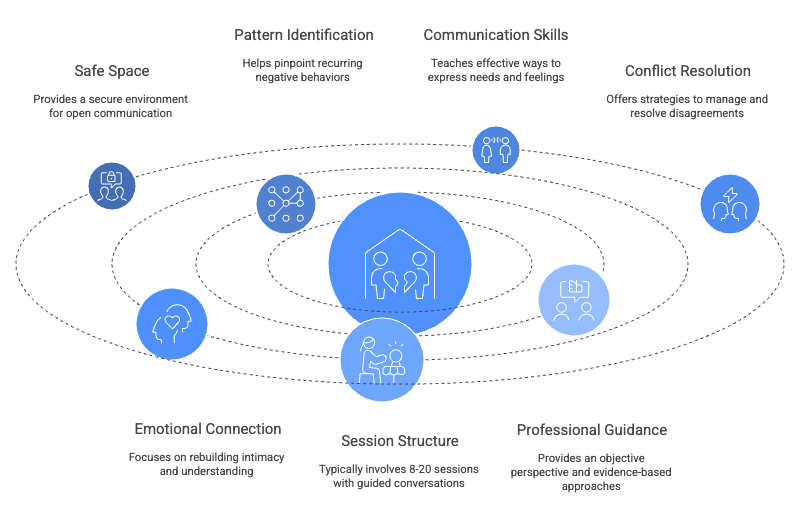
Couples therapy provides a safe, neutral space where both partners can express themselves openly and feel heard without judgment. Your therapist will help you identify specific patterns that aren't working and teach you practical communication skills to communicate more effectively, resolve conflicts, and rebuild emotional connection.
Most couples attend 8-20 sessions, though this varies based on your specific situation and goals. The therapy process involves both partners attending sessions together, with your couples therapist guiding conversations, helping you understand each other's perspectives, and giving you tools to practice between sessions. At the Providence Therapy Group, these sessions are tailored to your unique concerns, whether you're focused on anxiety, depression, trauma, or relationship challenges.
Professional support means having an objective guide who can spot patterns you might miss, interrupt unproductive cycles in real-time, and help both partners feel heard when communication has broken down at home. Licensed marriage and family therapists or family therapists specialize in helping couples navigate relationship challenges using evidence-based approaches like Gottman Couples Therapy or Emotionally Focused Therapy.
Getting Started with Relationship Counseling at the Providence Therapy Group
If you recognize any of these signs in your relationship, the Providence Therapy Group is here to help. With offices in Providence, Rhode Island and Cumberland, Rhode Island, we serve couples throughout Providence, Cranston, Edgewood, and surrounding areas, and you can schedule in-person or online sessions with our therapists to begin this work.
Seeking couples therapy is a sign of strength, not weakness—it shows you value your partnership and are willing to work on it. Our therapists specialize in couples counseling and marriage counseling, and can help you improve communication, rebuild trust, navigate life transitions, and strengthen your emotional connection in a supportive environment.
Studies of evidence-based couple treatments demonstrate significant improvements in relationship satisfaction, communication, and emotional connection. With professional guidance and commitment from both partners, most couples can improve their relationship and build a stronger, healthier partnership.
Many couples wonder if their problems are serious enough for therapy or if they should try to handle things on their own. Seeking couples counseling when you first notice persistent issues gives you the best chance for positive outcomes. Family therapy may also be appropriate if relationship issues are affecting children or other family members.
Don't wait six years to get help. If you're experiencing persistent relationship problems that you can't resolve on your own, schedule an appointment to get started with couples counseling.
Disclaimer: This article is for educational purposes only and is not a substitute for professional medical advice, diagnosis, or treatment. Always seek the advice of your physician or qualified mental health provider with any questions you may have regarding a medical or mental health condition. If you are experiencing domestic violence, please call the National Domestic Violence Hotline at 1-800-799-7233. If you are in crisis or experiencing thoughts of self-harm, please call 988 (Suicide and Crisis Lifeline) or go to your nearest emergency room.