
Is Online Relationship Therapy Right for You? What to Know Before Getting Started

Your relationship needs support, but the idea of scheduling in-person couples therapy feels overwhelming. Between conflicting work schedules, childcare challenges, or simply living in an area without many relationship specialists, traditional therapy seems out of reach.
You've heard about online couples therapy—virtual sessions with licensed therapists conducted from the comfort of your own home. But does it actually work? Is it right for your relationship? And how do you know if you're a good candidate for relationship therapy online?
The short answer: research shows that videoconferencing couples therapy is as effective as in-person therapy, with no significant differences in relationship satisfaction, mental health outcomes, or therapeutic alliance. But online therapy isn't right for every couple or every situation.
This guide helps you decide whether online relationship therapy is a good fit for you, what to expect, how to choose the right format, and how to prepare for your first session.
What Is Online Relationship Therapy?
Online relationship therapy—also called online couples therapy, online marriage counseling, virtual couples therapy, or online counseling for relationships—involves working with licensed therapists through internet-based platforms rather than meeting in person at a therapist's office.
There are two main types of online couples therapy services:
Videoconferencing with a Licensed Therapist
This format most closely resembles traditional in-person therapy. You and your partner meet with a couples therapist through live video sessions, with each virtual therapy session typically lasting 45-60 minutes. A randomized controlled trial comparing videoconferencing delivery with traditional face-to-face delivery found no significant differences between the two formats on any outcome measure, with both groups showing significant improvements in relationship satisfaction and mental health.
The therapist can see both of you, observe your interactions, and guide you through the same evidence-based approaches used in in-person therapy—including Emotionally Focused Therapy, the Gottman Method, and Cognitive Behavioral Therapy for couples. Licensed therapists providing online couples therapy have the same training and qualifications as those offering in-person therapy.
Web-Based Programs with Coach Support
These structured online programs guide you and your partner through activities and exercises designed to improve your relationship. A randomized controlled trial of the OurRelationship program with 300 couples showed significant improvements in relationship satisfaction (Cohen's d = 0.69), as well as individual functioning including depressive symptoms (d = 0.71) and anxiety (d = 0.94).
Most web-based programs include some level of support from a coach or counselor, which research shows improves engagement and outcomes.
Does Online Couples Therapy Actually Work?
The evidence is clear: online couples therapy works.
A comprehensive systematic review of 37 studies on videoconferencing psychotherapy for couple and family therapy found that videoconferencing delivery was feasible, acceptable, and efficacious. The research consistently shows that online couples therapy can improve:
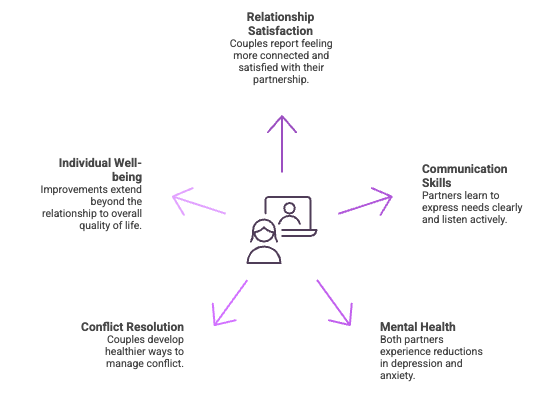
Relationship satisfaction and quality - Couples report feeling more connected and satisfied with their partnership
Communication skills - Partners learn to express needs clearly, listen actively, and improve communication
Mental health - Both partners often experience reductions in depression and anxiety
Conflict resolution - Couples develop healthier ways to manage conflict and resolve disagreements
Individual well-being - Improvements extend beyond the relationship to overall quality of life
One important nuance: while therapeutic alliance improves at twice the rate in in-person therapy compared to teletherapy, both formats ultimately build strong therapeutic relationships. This means therapists working online may need to pay extra attention to connection-building early in treatment, but the alliance develops effectively in both settings.
In our work with clients at the Providence Therapy Group, we've found that couples are often skeptical about whether online therapy can create the same connection as in-person sessions. Here's what we tell them: the research is clear that online couples therapy works just as well as traditional therapy. What matters most isn't whether you're in our office or on a screen—it's whether both partners are willing to engage honestly, practice new skills, and commit to the process. The format is less important than your willingness to do the work.
When Is Online Relationship Therapy Appropriate?
Online couples therapy can be an excellent choice for many couples, particularly in these situations:
You Face Logistical Barriers to In-Person Therapy
Busy schedules make coordination difficult. If you and your partner struggle to find time that works for both of you to attend in-person sessions, online therapy offers greater scheduling flexibility. You can often find evening or weekend couples therapy sessions more easily than with traditional therapy.
You live in different locations. Online couples therapy allows partners to join sessions from different places, which is particularly helpful for couples in long-distance relationships or when one partner travels frequently for work.
You live in a rural area with limited access to relationship specialists. Online therapy connects you with licensed marriage and family therapists or family therapist professionals regardless of your geographic location.
Childcare is a challenge. Attending therapy from home eliminates the need to arrange childcare for every therapy session.
Commuting is difficult or expensive. Online therapy saves travel time and transportation costs, making marriage therapy and relationship counseling more accessible and sustainable.
You Want a More Affordable Option
Cost-effectiveness analysis shows that web-based relationship programs become more cost-effective than in-person therapy once they serve at least 153-229 couples. Online therapy platforms and web-based programs typically cost less than traditional in-person marriage counseling, making relationship support accessible to couples who might not otherwise be able to afford therapy services.
You Feel More Comfortable at Home
Research on couples' experiences with videoconferencing therapy found that many felt the "distance" from the therapist created greater control and comfort. Some couples find it easier to discuss sensitive topics when they're in their own home rather than in a therapist's office.
The familiar environment can help you feel more at ease, particularly when addressing difficult relationship issues or mental health concerns. Couples seek therapy for various reasons including communication problems, intimacy concerns, and conflict resolution strategies, and feeling comfortable is essential for honest conversation.
You're Going Through Specific Life Transitions
Studies show that online relationship programs are effective for vulnerable populations including low-income perinatal couples, who face multiple barriers to accessing traditional relationship services during significant life transitions.
Online therapy can be particularly helpful when you're navigating perinatal mental health challenges such as pregnancy and postpartum depression or anxiety:
Pregnancy and new parenthood
Major life transitions like relocation or career changes
Health challenges that make leaving home difficult
Other circumstances that create barriers to in-person attendance
You Want Evidence-Based Treatment
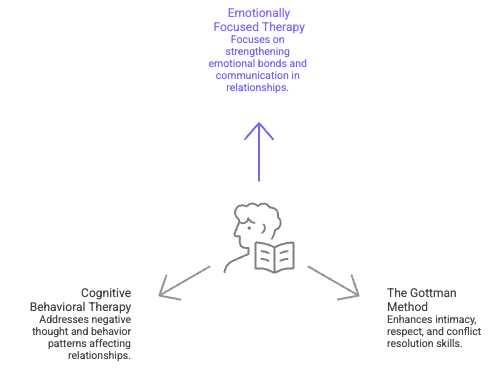
Online therapy platforms connect you with licensed therapists trained in evidence-based approaches including:
Emotionally Focused Therapy (EFT) - A structured approach that focuses on fostering secure emotional connections between partners. EFT helps couples identify negative interaction patterns and communicate emotions and needs openly, building a deeper understanding of each partner's perspective.
The Gottman Method - Based on decades of research by Dr. John Gottman, this approach helps couples increase intimacy, respect, and affection while developing conflict resolution skills to manage conflict more effectively.
Cognitive Behavioral Therapy (CBT) - Helps couples identify and change negative thought and behavior patterns that damage the relationship.
These approaches are delivered through online couples therapy sessions just as they would be in person, with licensed marriage and family therapists, licensed clinical social workers, or licensed professional counselors guiding the process, and many couples also benefit from Cognitive Behavioral Therapy (CBT) for individual mental health concerns.
When Is Online Relationship Therapy NOT Appropriate?
While online couples therapy works well for many couples, it's not suitable for every situation:
There Is Domestic Violence in Your Relationship
If there is physical, emotional, or psychological abuse in your relationship, couples therapy—whether online or in-person—is not appropriate and could be dangerous. Individual therapy in a safe, confidential setting is the appropriate path.
If you're experiencing domestic violence, please reach out to the National Domestic Violence Hotline at 1-800-799-7233 for support and safety planning.
Either Partner Has Severe Mental Health Conditions Requiring Intensive Treatment
Online couples therapy works best when both partners are relatively stable in their individual mental health. If either partner is experiencing:
Active suicidal thoughts or plans
Severe untreated depression or anxiety that impairs functioning
Psychosis or other mental health conditions requiring intensive psychiatric care
Substance abuse that needs dedicated treatment
Individual therapy or individual mental health treatment should be the priority, with couples therapy potentially added once individual stability is achieved. People in Providence can explore individual therapy options with top local therapists to address these concerns.
You Need Crisis Intervention
Online relationship therapy is designed for ongoing work on relationship challenges, not for crisis intervention, and people experiencing severe anxiety or sudden episodes of intense fear may need specialized support for panic attacks and related conditions. If you're in an immediate crisis—relationship or otherwise—you need more intensive mental health services than scheduled therapy sessions can provide.
You Don't Have Reliable Internet Access or Privacy
Online therapy requires:
Stable internet connection for videoconferencing
A private space where you can talk openly without being overheard
Basic comfort with technology (or willingness to learn)
If you can't meet these requirements, in-person therapy may be a better fit.
One Partner Is Unwilling to Participate
Couples therapy—online or in-person—requires both partners' active participation. If your partner won't engage in the process, individual therapy may be more appropriate for you to work on your own patterns and decide how to move forward.
We see many couples who wonder if their situation is "serious enough" for therapy or whether online therapy can handle their specific challenges. We often tell clients: if relationship distress is affecting your daily life, your mental health, or your happiness, that's serious enough. Online therapy can address most relationship concerns effectively. However, we're always honest when a couple needs more intensive support or when in-person therapy would be safer. Your wellbeing comes first, and we help you find the right level of care for your situation.
What Should You Look for in an Online Therapy Platform?
If online relationship therapy seems right for you, here's what to consider when choosing an online therapy platform or therapist, including whether a comprehensive teletherapy service for Rhode Island residents fits your needs:
Verify Therapist Credentials
Make sure therapists are:
Licensed in your state - Therapists must be licensed where you're located, not just where they're based
Qualified for couples work - Look for licensed marriage and family therapists (LMFTs), licensed clinical social workers (LCSWs), or professional counselors (LPCs or LHMCs) with couples counseling training
Trained in evidence-based approaches - Ask about their training in EFT, Gottman Method, CBT, or other research-backed methods
Consider the Format That Fits Your Needs
Live videoconferencing offers:
Real-time interaction with a couples therapist
Personalized feedback and guidance
Flexibility to address issues as they arise
Stronger therapeutic relationship development
Web-based programs offer:
The ability at your own pace
Structured curriculum based on research
Some coach or therapist support for guidance
Check Insurance Coverage and Cost
Many online therapy platforms accept insurance or allow for use of your out-of-network insurance benefits, though coverage varies by plan. Major insurance plans cover or reimburse for telehealth services including online couples therapy, but verify your specific coverage before starting.
If paying out of pocket, compare:
Per-session costs for videoconferencing therapy
Subscription models for ongoing support
One-time fees for structured web-based programs
Whether the platform offers sliding scale fees
Some couples counseling services may also offer premarital counseling with research-based assessments and feedback at different rates if you're engaged and preparing for marriage.
Assess Privacy and Security
Choose platforms that:
Use HIPAA-compliant videoconferencing technology
Encrypt your data and communications
Have clear privacy policies
Protect your personal health information
Look for Messaging Between Sessions
Many online therapy platforms allow couples to message their therapist between sessions. This can enhance communication and support, particularly when relationship challenges arise between scheduled therapy sessions.
How to Prepare for Online Couples Therapy
Once you've decided online relationship therapy is right for you, here's how to prepare and how to schedule an online or in-person therapy appointment that fits both partners' availability:
1. Discuss with Your Partner
Both partners need to be willing to participate and commit to the process. Talk openly about:
Why you want to try couples therapy
What you hope to improve in your relationship
Your willingness to be honest and vulnerable in sessions
Your commitment to completing the full treatment plan
2. Create a Private, Comfortable Space
Set up a space where you can attend virtual therapy sessions without interruptions:
Choose a quiet room with a door you can close
Ensure you won't be overheard by children, roommates, or others
Test your internet connection and camera beforehand
Have headphones available if needed for privacy
3. Complete the Intake Process
Most online couples therapy platforms require an intake questionnaire that assesses, much like the relationship-focused intake process at the Providence Therapy Group:
Your relationship history
Current relationship concerns
Individual mental health
Goals for therapy
Be thorough and honest—this information helps match you with the right couples therapist and ensures effective treatment.
4. Prepare to Be Open
Online couples therapy works best when both partners are willing to:
Share honestly about relationship challenges
Hear their partner's perspective with patience and active listening
Try new communication skills and conflict resolution techniques
Practice exercises between sessions that might draw on Dialectical Behavior Therapy (DBT) skills for emotion regulation
Give feedback about what's working
5. Plan for Technical Issues
Have a backup plan in case of technology problems:
Exchange phone numbers with your therapist
Know how to reconnect if the video drops
Test your platform's technical support options and consider whether supplemental online or in-person group therapy for communication and connection could support your work as a couple
Be patient with occasional technical difficulties
From a clinical perspective, we've found that couples who do best in online therapy come prepared to be vulnerable and work as a team. We ask couples to create a private space free from distractions, show up ready to listen to each other's perspectives, and practice skills between sessions. The couples who make the most progress treat their virtual therapy session with the same importance as an in-person appointment. When both partners bring that level of commitment, online couples therapy can transform relationships just as effectively as meeting in our office.
What to Expect in Your First Session
Your first online couples therapy session will typically involve:
Initial Connection
Your therapist will help you feel comfortable with the virtual format, test the technology, and establish how you'll communicate during sessions.
Relationship Assessment
The therapist will ask about your history, and may also explore experiences of past trauma that could benefit from specialized trauma therapy:
What brought you to couples therapy
Your relationship history and family dynamics
Specific relationship issues you want to address
Your individual backgrounds and mental health
Your goals for therapy
Treatment Planning
Together, you'll discuss:
Which evidence-based approach might work best for you
How many couples therapy sessions you might need
What you'll work on first
How you'll measure progress
Logistics like scheduling and communication
Setting Expectations
Your therapist will explain:
How online couples therapy works
What happens between sessions
How to handle conflicts that arise outside therapy
When to reach out for additional support
What success looks like in couples therapy services
Getting Started with Online Relationship Therapy at the Providence Therapy Group
If you're ready to explore online relationship therapy, the Providence Therapy Group offers online couples therapy services with licensed therapists trained in evidence-based approaches.
With offices in Providence, Rhode Island and Cumberland, Rhode Island, we serve clients throughout Providence, Cranston, Edgewood, and surrounding areas through our online teletherapy platform. Our therapists specialize in couples counseling and relationship therapy, helping partners improve communication, resolve conflicts, and build stronger emotional connections.
Online couples therapy removes common barriers to getting help—no commute, flexible scheduling, and the comfort of attending from your own home. Whether you're facing communication problems, navigating life transitions, or wanting to strengthen an already healthy relationship through premarital counseling or marriage therapy, online relationship counseling can provide the support you need.
We understand that every relationship is unique. Our therapists work with couples of all types—married couples, engaged couples considering premarital counseling, long-term partners, and romantic relationships at any stage of their journey, and some couples may also choose to work individually with a provider like Jennifer McMillan, a Providence-based therapist for individuals and couples. We provide a supportive environment where both partners can feel heard, understood, and equipped with the tools to build a healthy relationship.
Many couples seek therapy to strengthen their partnership and gain a deeper understanding of each other's needs and perspectives, and sometimes that work includes supporting one partner through specialized OCD treatment with evidence-based therapies. Whether you're working on conflict resolution, improving communication, or navigating relationship distress, our couples counseling services provide evidence-based support tailored to your specific relationship concerns.
If you're wondering whether online relationship therapy is right for you, schedule an appointment to speak with one of our experienced couples therapists. We'll help you determine if online therapy is a good fit and create a treatment plan tailored to your relationship's specific needs.
Disclaimer: This article is for educational purposes only and is not a substitute for professional medical advice, diagnosis, or treatment. Always seek the advice of your physician or qualified mental health provider with any questions you may have regarding a medical condition or mental health concern. If you are experiencing domestic violence, please call the National Domestic Violence Hotline at 1-800-799-7233. If you are in crisis or experiencing thoughts of self-harm, please call 988 (Suicide and Crisis Lifeline) or go to your nearest emergency room.