
Your Partner's Depression Is Affecting Your Relationship — Here's What the Research Says to Do
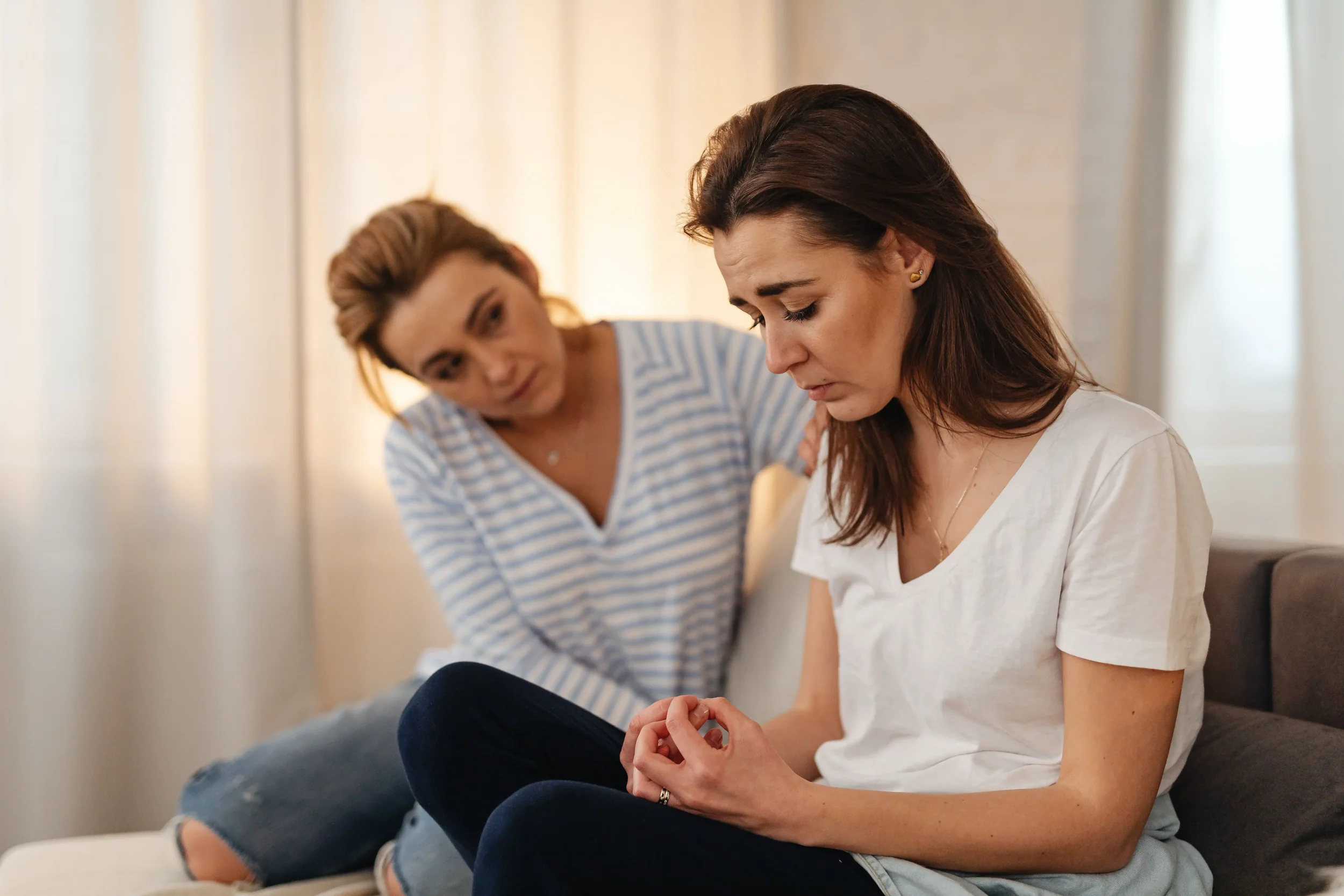
When one partner is depressed, both people in the relationship feel it. This isn't a reflection of anyone's failure — it's what the research consistently shows. Depression doesn't stay contained to the person experiencing it. It spreads into everyday life, changes how couples communicate, and affects the mental health of both partners over time. Figuring out how to deal with a depressed partner — how to offer the right emotional support without burning yourself out — is one of the harder things a relationship can ask of you. Here's what the evidence actually says about dealing with depression in a relationship, and what genuinely helps.
How a Partner's Depression Affects a Relationship
Depression creates a bidirectional cycle in relationships. One their depression predicts declining satisfaction in both — not just the person who is depressed. Couples where one partner has depression show increased negative communication patterns (blame, withdrawal, critical remarks) and decreased positive ones (warmth, problem-solving, openness). Both partners' feelings about the relationship, their sense of connection, and their feelings about themselves tend to suffer.
There's also a contagion risk. Spouses of depressed individuals are about four times more likely to develop depression. This happens through shared environments, shared stressors, and emotional contagion — synchronizing with a partner's emotional state through mimicry of expressions, tone, and behavior. You don't "catch" depression like a cold, but living alongside it has a measurable effect on your own mental health.
Understanding this isn't meant to alarm you. It's meant to underscore why this is a situation that calls for active support— for your their depression, and for your own mental health and well being.
What Are the Warning Signs of Depression in a Partner?
Not everyone shows depression the same way. Recognizing depression early matters — the sooner someone gets support, the better. If your partner hasn't had a depression diagnosis yet, a healthcare professional can help. Common depression symptoms to watch for include:
Persistent low mood or feeling sad most of the day
Loss of interest in everyday things they used to enjoy, including social activities and hobbies
Changes in sleep — either sleeping much more or struggling to sleep
Low energy, fatigue, or difficulty completing household chores and everyday tasks
Withdrawal from friends, family members, and social events
Feeling worthless or expressing low self esteem
Difficulty concentrating or making decisions
Increased irritability or negative emotions
Increased anxiety, worry, or physical complaints with no clear cause
In more serious cases: expressing hopelessness, talking about harm, or showing symptoms of severe depression like inability to function, including during vulnerable times such as pregnancy and the postpartum period
Depression doesn't always look like sadness. In some people, it shows up as anger, flatness, or complete withdrawal. Depression can affect their interest in you, in your relationship, and in intimacy — in ways that have nothing to do with their feelings for you. It's easy to feel overwhelmed by the distance this creates, especially when you don't know how to bridge it. Understanding this is one of the more important things you can do for both of you.
If your partner is showing warning signs like hopelessness or talking about harm, connect them with a healthcare professional immediately, or call 988 or reach out to a licensed therapist in Providence.
What the Research Says Actually Helps

Reduce criticism — even when it's hard
This is one of the most important and least intuitive findings in the literature. Perceived criticism is the single best predictor of relapse — more predictive than clinical measures of illness severity. When partners are consistently non-critical, recovery is more likely and more durable.
This doesn't mean pretending things are fine or suppressing your own feelings. It means learning to understand that withdrawal, low energy, and low mood are depression symptoms — not character flaws, not choices, not a reflection of how your partner feels about you. When both partners understand this, it changes how they cope with difficult moments.
Create a safe space for open and honest communication
Depression makes it hard for people to talk about their feelings — often because they feel ashamed, like a burden, or unable to find words for their own experience. The feelings that accompany depression — emptiness, worthlessness, numbness — can be hard to describe even to someone close. Many people with depression don't discuss their feelings even with people they love and trust. Shame, guilt, and fear of being a burden all make it harder to open up about feelings of sadness, emptiness, or hopelessness. Validating those feelings — saying "that sounds really hard" rather than "you'll be okay" — can itself be therapeutic. A safe space for honest feelings often matters more than advice. Creating a safe space for your partner to talk without fear of judgment or criticism can be genuinely protective.
Honest communication doesn't mean pressing for more than your partner can give. It means checking in consistently, asking specific things ("Is there anything I can help with today?" rather than "Are you okay?"), and letting them know they can express their feelings without it turning into an argument or a fix-it conversation. Encourage your partner to share what they're experiencing, and encourage them toward professional help when feelings of sadness, anxiety, or hopelessness become difficult to manage alone.
Offer practical support for everyday things
Depression drains energy for the basics. Household chores pile up. Everyday things that used to be simple — watching tv, getting outside, cooking a meal — can feel overwhelming for someone with depression. Practical ideas: take specific tasks off their plate, suggest low-effort activities together, and help them maintain a routine without pressure. For example, a short walk outside can help with low mood. Or watching something together — low-key shared time that reduces isolation without requiring much energy.
The goal isn't to do everything for them — which can deepen feelings of helplessness and dependence — but to reduce barriers to functioning while they're working on getting better. For example, asking "Would you like me to handle dinner tonight?" is more useful than "You need to take better care of yourself."
Encourage professional help — and learn about depression yourself
Social support quality predicts recovery — people with more supportive relationships show significantly better treatment outcomes (OR 2.17). Your support matters. But your support works best when it's paired with professional treatment.
Encourage your partner to seek professional help. If they're hesitant, offer to help them find a health professional, go to the first appointment with them, or help with practical barriers like scheduling. Dealing with depression alone is harder — a health professional can evaluate symptoms, make a proper depression diagnosis, and recommend treatment options including individual therapy for depression and anxiety, medication, or both. The National Institute of Mental Health notes that depression is among the most treatable mental health conditions, with most people seeing significant improvement with the right support.
Learn about depression yourself. Family psychoeducation reduced relapse rates from 50% to 8%. Understanding depression as a mental health condition with specific symptoms, a typical course, and effective treatments changes how you respond. It reduces the tendency to take symptoms of depression personally and increases the kind of consistent, non-critical support that actually helps partners better cope with their depression. Self help resources — books, mental health foundation materials, reputable websites — can be a good starting point. Self help and professional support work best together; neither replaces the other, and working with a practice like the Providence Therapy Group for ongoing support can make it easier to sustain changes over time.
Consider couples therapy
Couple therapy is as effective as individual therapy for depression and more effective at reducing relationship distress. It's not just about solving relationship problems — it's about addressing depression in the relational context where it's actually occurring. Partners learn to support recovery without enabling avoidance, to communicate in ways that reduce expressed emotion, and to maintain connection through a difficult period.
A couples therapist can also help you both understand what's depression and what's a genuine relationship issue — a distinction that matters for how you cope and what to do next. Many couples find that working with a health professional who understands both mental health and relationships makes the process feel less overwhelming, whether in ongoing couples work or structured supports like premarital and relationship counseling.
From the Therapist
"One of the most common things we hear from partners of people with depression is that they don't know whether to push or back off. The research gives us a surprisingly clear answer: consistent, non-critical availability is more helpful than any specific strategy. The partner who stays emotionally present without judgment — who doesn't take the symptoms personally and doesn't withdraw in frustration — gives their loved one a real advantage in recovery."
You Also Need Support
Caregivers of depressed adults report lower mental health and greater burden than caregivers of most other chronic conditions. Caring for a depressed partner is genuinely hard. If you feel overwhelmed, feel guilty for your own needs, resentful of what's been lost — these feelings are normal responses to an abnormal situation. Depression in a partner affects your feelings about yourself, the relationship, and your own life. It's normal to have complicated feelings — love and frustration, care and exhaustion, hope and fear — sometimes all at once. You don't have to have it all together to be a good support. Acknowledging your own feelings honestly, including to yourself, is part of how you stay in this for the long haul.
Your own well being is not a luxury. It's a condition for being able to keep showing up — and friends, family, and a therapist of your own all count as part of that infrastructure. Partners who cope well over time treat their own mental health and well being as genuinely important — not as an afterthought.
Self care for partners of people with depression:
Maintain your own relationships. Don't let your social life collapse around your this depression. Your friends and family members are a resource for you.
Seek support for yourself. Support groups for caregivers, individual therapy, or even talking to trusted friends and family — all of these help, especially if you're also coping with panic attacks and intense anxiety symptoms.
Set limits on what you can sustain. You can be a source of support without being your partner's only source. Encourage them toward professional support and broader networks, including accessible options like online teletherapy with licensed clinicians.
Watch for your own depression symptoms. Given the contagion risk, monitoring your own mood, energy, sleep, and interest levels matters, and structured approaches like Dialectical Behavior Therapy (DBT) for emotion regulation can sometimes help partners cope with intense feelings. If you're struggling, seek advice from your own healthcare professional or consider joining a supportive therapy group where you can connect with others facing similar challenges.
From the Therapist
"We see partners who've spent months putting themselves last — giving everything they have to a loved one who's struggling, and then wondering why they feel empty. Supporting someone with depression is meaningful work. But it requires self care activities, boundaries, and regular check-ins with yourself. The most effective support usually comes from partners who have their own support structures in place. You cannot effectively help from a depleted place."
Your support for your partner and your support for yourself are not in competition — they reinforce each other.
From the Therapist
"We often tell partners who come in alone: your presence here matters. You don't need to wait until things reach a crisis point. Individual therapy for the non-depressed partner, or couples therapy for both of you, can interrupt the cycle early — before relationship distress compounds the depression, and before the depression compounds the relationship distress. Getting support for yourself is one of the most helpful things you can do for your partner."
When to Seek More Help
If your the depression isn't improving with support and professional treatment, or if you're feeling like the relationship can no longer sustain this, it's worth seeking more targeted support. That might mean more intensive treatment for your partner, couples therapy for both of you, or individual therapy for yourself.
If your partner is expressing thoughts of harm or you're worried about their safety, seek professional help immediately. Contact a healthcare professional, call 988 (the Suicide and Crisis Lifeline), or take them to an emergency room. Longer term, evidence-based approaches such as Cognitive Behavioral Therapy (CBT) for depression and related conditions can be an important part of recovery.
Depression is treatable. Most people respond to treatment, and relationships can — and do — recover. Better mental health for one partner tends to improve the relationship for both — and gives both partners more capacity to cope with the challenges that remain. But that recovery is more likely when both people have support, understand what they're dealing with, and are working with a health professional who can guide the process.
If you're in the Providence, Cranston, Cumberland, or Edgewood area and you're dealing with depression in your relationship — whether you're the one supporting or the one struggling — the therapists at the Providence Therapy Group can help.
Not sure where to start?
Talk to a Providence therapist who can work with you.
Disclaimer: This article is for educational purposes only and is not a substitute for professional medical advice, diagnosis, or treatment. Always seek the advice of your physician or qualified mental health provider with any questions you may have regarding a medical or mental health condition. If you are in crisis or experiencing thoughts of self-harm, please call 988 (Suicide and Crisis Lifeline) or go to your nearest emergency room.